
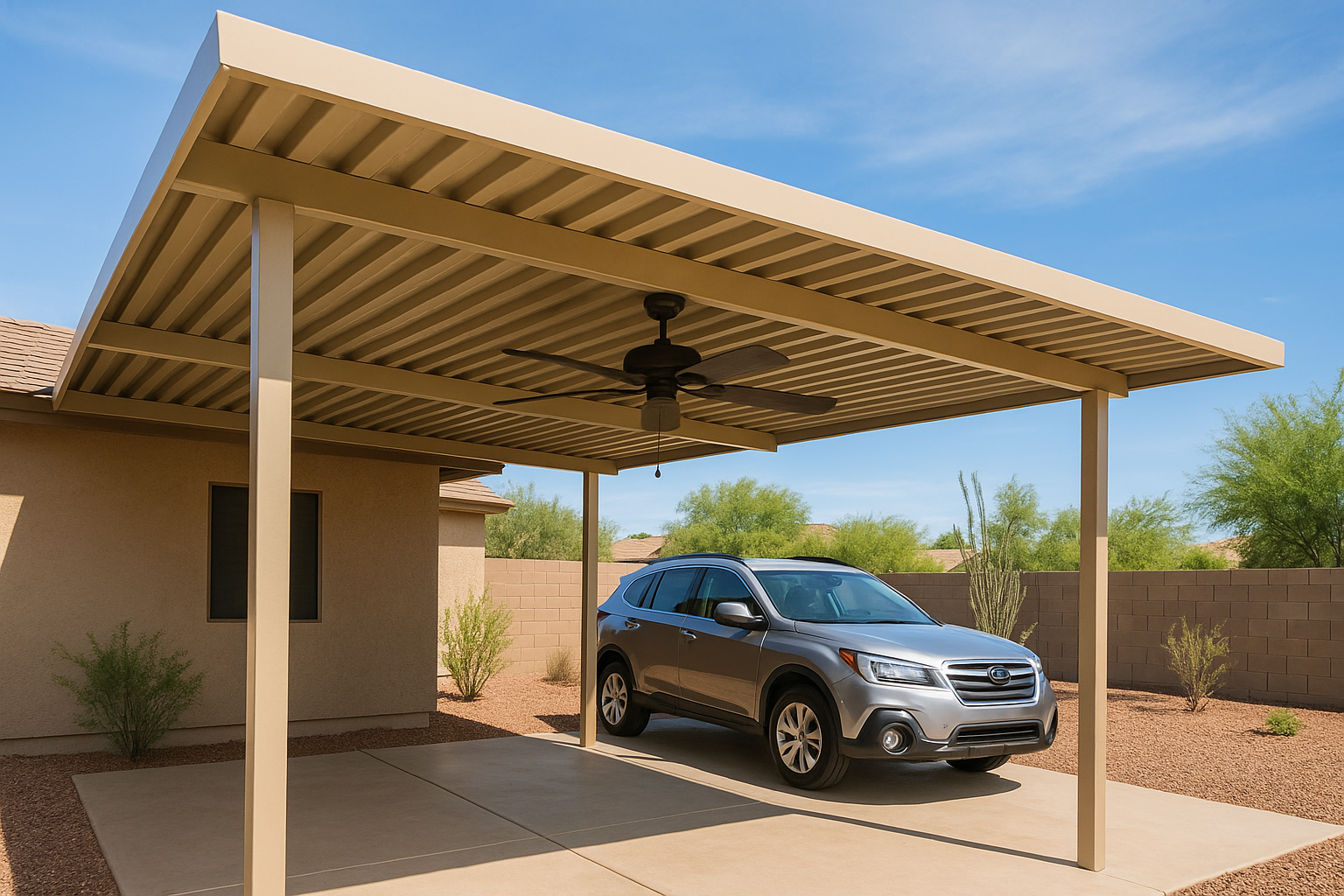
Step outside on a July afternoon in Maricopa County and you can almost hear your driveway hum. The sun beats down, the truck bakes, and that steering wheel? It’s a branding iron. Here’s the thing: shade helps, but moving air makes it livable. A carport with well-placed fans turns a heat trap into a breezy, practical spot—somewhere you can unload groceries, wrench on a project, or stage an impromptu lemonade stand without melting. That’s our sweet spot at Arizona Pergola Company: shade structures designed for real Arizona heat, then tuned with airflow that actually feels cool.
Why fans under a carport make Arizona sense
Shade alone can cut surface temps by 20–40 degrees, but when it’s 110 outside, that still feels harsh. Fans take the edge off in two ways. First, they speed up sweat evaporation—your body’s built-in A/C. Second, they push away that layer of hot, still air that hangs under a roof. Even a moderate outdoor fan can create a 6–8°F perceived cooling effect. You know what? On a scorcher, that’s the difference between “nope” and “let’s get this done.”
It’s also practical. Airflow helps dry off that quick monsoon sprinkle, purges heat that radiates from your hood and concrete slab, and—bonus—discourages bugs that hate breezy conditions. Not that mosquitoes are New Orleans-level here, but in irrigated pockets of Gilbert or Laveen, you’ll notice fewer flyers around your ankles.
The build: carport Designs that love airflow
Attached or freestanding?
Attached carports tie into your home, which can be great for convenience and power routing. Freestanding models offer flexible placement and can angle to block that fierce west sun. We’ll help you place it so afternoon glare hits your roof, not your eyes.
Roof Materials that stay cooler
Insulated aluminum panels keep heat from radiating down. Light-colored baked enamel tops shed sunlight better than dark roofs. Polycarbonate can work too, but use heat-reducing panels and plan for glare control. The goal is simple: block direct sun, then move the trapped warm air away with fans.
Height and clearances—yes, it matters
Most homeowners prefer 8.5–10 feet of clearance for SUVs and trucks. Fans need to sit high enough to avoid tall cargo but low enough to move air where you feel it. We typically target blade height around 8–9 feet from the slab. If your carport is tall, we’ll use the right downrod and bracing so the fan doesn’t wobble in a breeze.
Fan basics without the fuss
Outdoor ceiling fans aren’t all equal. Look for “wet-rated” models—these handle direct rain and windblown dust (hello, haboobs). Many indoor fans are “damp-rated,” which isn’t enough for monsoon season.
What else to consider?
- Size and airflow: Larger 60–84-inch fans move serious air across open spaces. Check CFM (cubic feet per minute). Higher CFM means more breeze.
- Motor type: DC motors run quieter and use less power. They also start and stop smoothly.
- Blades: Composite or ABS blades resist warping in heat better than wood.
- Controls: Wall switches, handheld remotes, and now smart controls (Wi‑Fi apps, Alexa/Google). We can set scheduled runs for peak heat.
- Brands we trust: Minka‑Aire Xtreme H2O, Modern Forms exterior lines, Hunter Outdoor, and Big Ass Fans Haiku for premium installations.
One mild contradiction here—we say bigger fans are great, and they are, but sometimes two medium fans beat one giant fan. Why? Even coverage. If your carport is wide, dual fans reduce dead spots and feel more consistent across the working area. We’ll map the space and show you airflow patterns you can actually feel.
Electrical and safety, Arizona‑style
A clean install is about more than hiding wires. Outdoor fans need weatherproof boxes, proper bracing, and sealed connections. GFCI protection and in-use covers keep the system safe. In many cases, your carport’s lighting circuit can power a fan, but we’ll verify load and sometimes recommend a dedicated line—especially if you’re adding lights, outlets for tools, or an EV charger.
Speaking of EVs: Moving air helps while your car cools after a drive and makes plugging in more pleasant. We can place the fan so it doesn’t fight with a wall-mounted charger or conduit path.
Permits and HOA? Most Valley cities require permits for attached or freestanding carports. Setbacks, easements, and wind ratings apply (monsoon gusts are no joke). We handle drawings, engineering, and permits where needed, and we coordinate with HOAs across Chandler, Peoria, Glendale, and beyond so you don’t get a surprise letter.
Comfort extras that make a big difference
Fans are the star, but small features stack up:
- West-side screening or slatted privacy walls to block low afternoon sun without stopping airflow.
- Insulated roof panels to cut radiant heat—the kind that makes your scalp prickle even in shade.
- Light color palettes that reflect sunlight and match desert stucco tones—sand, bone, soft gray.
- Smart timers that run fans during peak heat, then taper off at night.
Misters? We get asked all the time. They’re great for patios, but they can leave water spots on vehicles and tools—especially with hard water. If you want both, we’ll set distinct zones: a fan-forward car area and a mist-friendly hangout zone off to the side. Or pair high-airflow fans with a fog-free shade strategy. Your call; we’ll guide you with real-world pros and cons.
Curious about solar? A small PV panel can power a low-watt DC fan, but for steady performance on still, hot evenings, hardwiring is the dependable play. We can integrate solar for lighting if you want a hybrid approach.
What it costs—and what you get back
Costs vary with size, materials, electrical work, and how many fans you want. A sturdy aluminum carport with a wet-rated fan usually lands in a broad range, and adding electrical, lighting, or side screening adjusts things. We’ll spell it out line by line so you see exactly where each dollar goes.
What do you get back? Cooler unloads, safer traction after rain, less UV damage to paint and interiors, a nicer spot to tinker, and lower stress when that first blast of heat hits you stepping out the door. It also boosts curb appeal—the kind that feels good every single morning.
Care that takes minutes
Most outdoor fans today are sealed and maintenance‑light. A quick wipe with a microfiber cloth keeps dust from building up (do this before monsoon season and after the worst dust storms). Avoid harsh cleaners; warm water with a drop of mild soap is enough. If we install smart controls, we can set a gentle reverse mode for cooler months to push warmer air down without a draft—handy next to a garage workshop.
Why Arizona Pergola Company?
We design for Valley realities: triple‑digit highs, microbursts, HOAs, long driveways, lifted trucks, and that stubborn west sun. Our carports and pergola covers use powder‑coated aluminum or steel, heavy-duty footings, and hardware rated for outdoor abuse. We think about sightlines, how the fan feels when you’re standing by the trunk, and the little details like conduit runs that won’t fight your future landscaping. It’s simple: built clean, built strong, built cool.
We’re local, from Buckeye to Queen Creek. We know which lots get baked at 4 p.m., and we’ve got solutions that look sharp with tile roofs and stucco. And yes—we stand behind our work.
Ready to feel that breeze?
If you’re picturing a cool, shaded carport that actually feels good in August, let’s make it real. Call Arizona Pergola Company at 480-568-5870, or Request a Free Quote. We’ll measure, design, and install a carport with fans that turns heat into comfort—summer after summer.