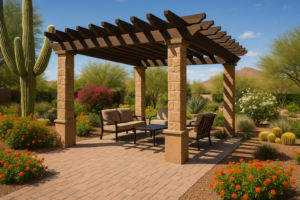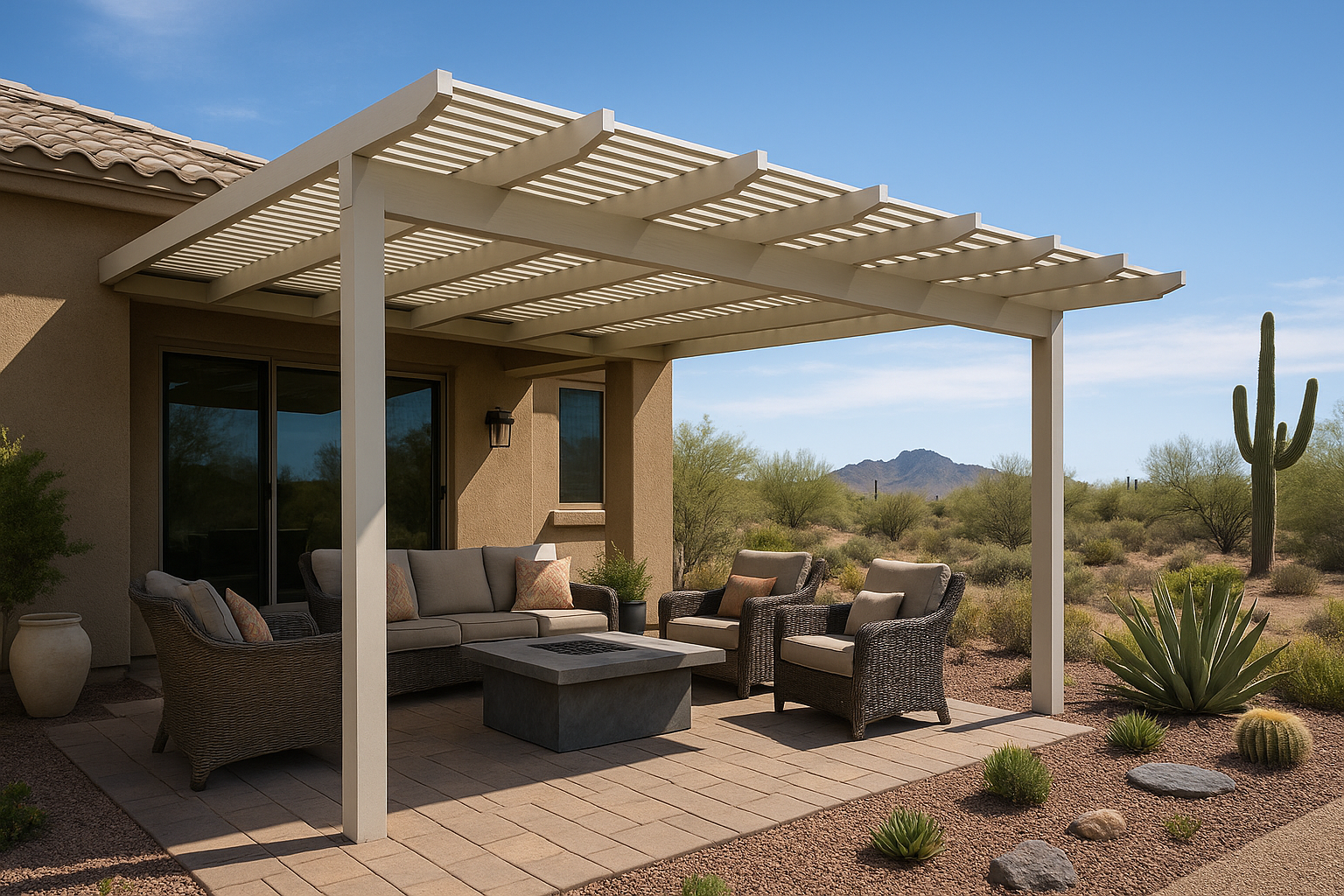
Step outside in July and the Phoenix sun gives you that full-body “hello.” It’s gorgeous, but it’s also intense—UV, heat, the works. A smart patio cover doesn’t just add shade; it shapes how you live outside. Morning coffee out back in Gilbert? Sunday carne asada in Glendale? Movie nights in Mesa when the air finally cools? With the right roof, your patio becomes the easy spot for all of it. At Arizona Pergola Company, we design covers that look elegant, stand up to monsoon gusts, and feel great year-round.
What a Maricopa County patio really needs
Here’s the thing: our desert climate asks more from a patio roof than most places. We’ve got triple-digit heat, sudden downpours, dust, and the occasional haboob. So we build for three essentials—shade, airflow, and drainage—while keeping your home’s style and HOA rules in mind. Light-colored finishes reflect heat. Integrated gutters handle bursts of rain. And smart structure resists those evening gusts that seem to come out of nowhere.
Looks matter too. A cover should blend with your stucco, tile roof, or modern lines, not fight them. We’ll help you match textures and Colors, from soft desert sand tones to crisp modern whites.
Lattice pergolas: shade with a breeze
Lattice pergolas are the classic “sit and stay a while” shade. Slats create dappled light—cozy, not cave-like—so your plants and pets get filtered sun. You know what? On spring mornings, that pattern of light and shadow feels like a little desert magic.
Materials come down to wood or aluminum. Wood gives that warm, timeless look. It can be stained to match your beams or doors. Aluminum (often called “alumawood”) brings the wood-grain texture without the yearly sanding and staining. It won’t warp, and it shrugs off UV.
- Best for: patios that need airflow and style without full blackout shade
- Consider: adding shade cloth above the slats in summer for extra cooling
- Maintenance: rinse dust, re-stain wood every few years, tighten fasteners before monsoon season
One caveat: lattice won’t keep heavy rain off your furniture. It’s shade-first. If you want bone-dry cookouts, keep reading.
Solid roof covers: cool, dry, and tidy
Solid roofs give the most comfort, plain and simple. Two approaches lead the pack here.
Insulated aluminum roof panels
These panels sandwich foam between aluminum skins, so they block heat and hush noise. We like them for their clean lines, built-in gutters, and hidden wiring (fans and lights look seamless). They handle summer sun like champs and keep monsoon rain out—great for outdoor TVs, rugs, and kids’ gear.
Wood-framed with shingles or tile
If you want to match your home’s roof exactly, a wood frame with shingles or tile ties everything together. It’s beautiful and sturdy. Just know wood asks for periodic care in our dry heat, and tile loads call for proper engineering.
Either way, you’ll feel the difference in July. Add a fan and a mister line, and suddenly 6 p.m. feels—dare we say—relaxing.
Louvered roofs: a dimmer switch for the sky
Want control? Louvered systems tilt open for a breeze, close flat for rain, and stop anywhere between. Think of it as a skylight you can steer. Many include rain sensors and app controls (Somfy-style motors are common), which means the roof will shut itself when those afternoon clouds roll in.
They’re sleek, highly adjustable, and wind-rated. The tradeoff is cost; they sit on the premium end. For homeowners who host often or care about exact light levels, they’re a game changer.
Translucent panels: light without the burn
Polycarbonate panels bring in natural light while blocking most UV. Choose clear for brightness or opal for softer glow. They’re great over garden corners, pet zones, or spaces where you don’t want a “dark” porch but still need protection.
They do make rain a bit louder than insulated panels, and hail resistance depends on thickness. We’ll size panels and fasteners for local wind loads and set the pitch so water moves where it should—away from your door, not toward it.
Shade sails and fabric canopies: casual, creative, and quick
Fabric shade can look playful or modern, depending on how it’s rigged. High-density shade cloth cuts UV by around 90–95% yet keeps air moving. Triangles and layered shapes add drama without a heavy look.
Fabric does need attention: proper tension, seasonal checks, and replacement every few years. And HOAs have rules—no surprise there. We’ll help with hardware placement and approvals so your sail looks intentional, not temporary.
Finishes and colors: small choices, big comfort
Light colors reflect heat better, which matters here. A soft almond or crisp white on the underside can drop perceived temperature—and brighten the space at night. Woodgrain aluminum gives you the cozy look with less upkeep. Matte finishes hide dust; glossy shows it.
We can also design gutters that feed a rock swale or basin, protecting your landscaping and keeping splashback off your patio. It’s a small detail that saves headaches during a big cell.
Permits, HOAs, and monsoon readiness
Let me explain how we make this smooth. City permits in Phoenix, Chandler, and Peoria typically check setbacks, attachment details, and footings. We handle drawings and load calcs. HOAs in Scottsdale and Gilbert often ask for color samples and elevations—yep, we prep those too.
For monsoon season, anchoring is everything. Posts need proper footings, beams need the right spans, and connections need hardware that doesn’t wobble. We add adequate pitch, sealed seams, and oversized downspouts so the first five minutes of a downpour don’t overwhelm your deck.
Quick guide: pick the roof that fits your life
- You love morning light but hate harsh glare: lattice or translucent panels
- You want dry furniture and cool shade all summer: insulated solid roof
- You host often and want control for every hour: motorized louvers
- You need budget-friendly shade, fast: fabric sails or a basic lattice
- You want perfect match with your home’s roofline: wood-framed with shingles or tile
Still torn? Honestly, a short site visit answers most questions. We’ll look at sun angles, wind paths, and where you like to sit at 5 p.m.
Care and upkeep that actually work here
Desert dust is relentless, but upkeep can be simple. Rinse covers every month or two. Clear gutters before monsoon. For wood, a fresh coat of stain every few years keeps it happy. For louvered systems, a quick wipe of the tracks and a check on the battery backup does the trick. Fabric? Bring sails down ahead of a major wind event and store them dry—easy habit, saves headaches.
Pro tip: a light-colored ceiling paired with a dark fan reduces glare and hides dust. Small thing, big difference.
Costs and timelines in Maricopa County
Budget depends on size, materials, and extras like lighting or fans. As a general feel:
- Lattice pergolas: from the mid $3,000s for smaller builds, higher for larger or wood
- Solid insulated roofs: often in the $7,000–$15,000 range depending on span and features
- Louvered systems: usually $12,000 and up, based on area and controls
- Shade sails: more flexible; starts lower but varies with hardware and posts
Permitting and HOA steps can take a few weeks. Most installs run one to three days once everything’s approved. We plan around your calendar and, when possible, around the weather—those pop-up storms have no manners.
Ready to shade your patio, Arizona-style?
If you’re picturing your perfect weekend on a cooler, better-looking patio, we’re ready to help bring it to life. Call Arizona Pergola Company at 480-568-5870, or Request a Free Quote. We’ll measure, sketch a plan that suits your home and HOA, and get you a clear, friendly price. No pressure—just shade that feels right.