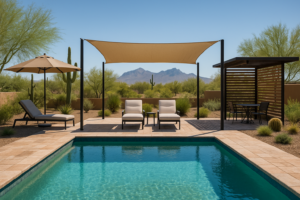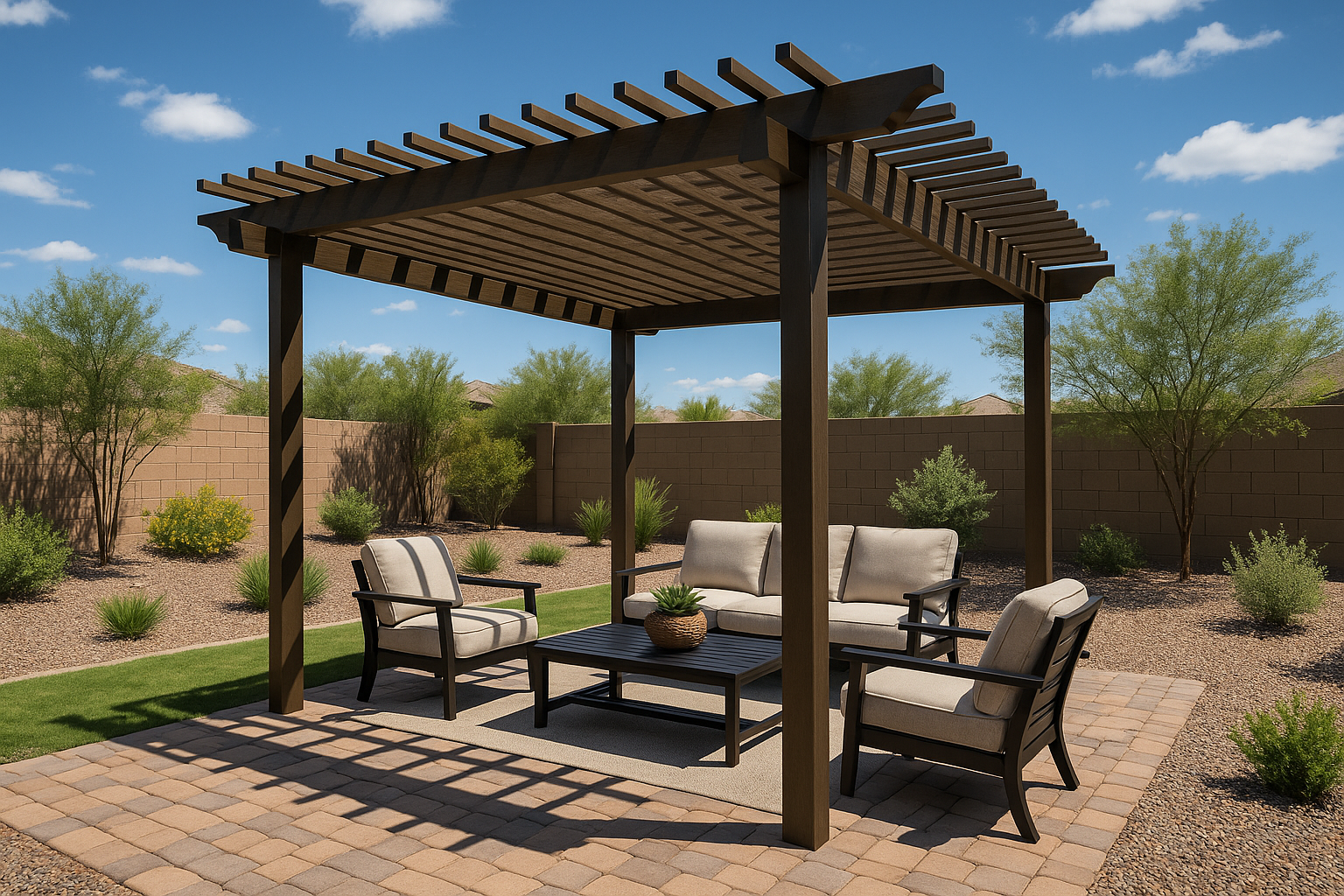
If you live in Maricopa County, you know shade isn’t a luxury—it’s survival. But here’s the thing: shade can also be stylish. A freestanding patio cover does both. It brings breezy comfort to your yard while creating a real, usable room outside. Poolside. Garden-side. Anywhere you actually want to sit. And when it’s built right, it handles the desert sun, monsoon winds, and those spur-of-the-moment backyard get-togethers. That’s our sweet spot at Arizona Pergola Company.
Why freestanding covers make sense here
Freestanding patio covers have one big advantage: flexibility. You’re not stuck attaching to your house. That means you can shade the pool Baja shelf, carve out a cozy corner by the mesquite tree, or build a private nook where the stucco wall breaks the wind.
They also breathe better. Air moves freely under an open structure, so you get shade without that trapped-heat feeling. In the Sonoran sun—even in early spring—you’ll notice the difference.
Plus, freestanding means fewer headaches near rooflines. No flashing against clay tiles. No fussing with eaves. And if you’ve got an HOA (hello, most of the Valley), a standalone cover often clears the approval process faster because it keeps your house untouched and easy to match.
Pick your vibe: from airy lattice to total cover
Pergola with lattice or slats
Classic look, cool shadows. A slatted pergola breaks up direct sunlight while letting heat float up and away. Angle the slats based on your yard’s sun path and you’ll catch morning light and block that fierce west sun—kind of like turning the brim of a hat.
Solid-roof ramada or pavilion
When you want real, all-day shade (and dry seating during those monsoon bursts), a solid-roof cover is your friend. Insulated roof panels help knock down radiant heat from above. It feels calm under there—like a quiet porch, even if the neighborhood’s buzzing.
Motorized louvered systems
These pivoting roofs adjust with a button. Open for winter sun. Close tight for full shade or rain. If you love tech that earns its keep, this is the smart shade solution. It’s a bit like sunglasses you can tilt, then shut completely when the clouds show up.
Gazebo-style or pavilion with columns
Think: backyard statement. Stucco-wrapped posts to match your home, or sleek powder-coated steel for a modern feel. It’s substantial—but not bulky—when designed with the right proportions and sightlines.
Materials that laugh at the desert (politely)
Powder-coated aluminum and wood-look aluminum
Lightweight, rust-resistant, and low maintenance. We use UV-stable coatings so color holds, even after summers that hit 115°. Wood-look aluminum (often called Alumawood-style) gives you that warm grain without yearly staining. Hose it off and you’re done.
Cedar or redwood
Love the real-wood feel? We get it. Cedar and redwood smell great, take stain well, and add natural charm. You’ll want to refresh the finish now and then—every couple of years is typical here—but if you don’t mind a little upkeep, the payoff is character.
Steel frames
For wide spans and bold lines, steel is tough to beat. It handles wind loads well and keeps columns slim. We protect it with high-quality coatings and hidden fasteners, so it looks clean and stays that way.
Design touches that change how it feels out there
You know what? Small upgrades shift the whole mood:
- Ceiling fans with sealed housings (great for dust and the occasional splash)
- Misters with stainless nozzles—fine mist, less drip
- Integrated LED downlights and dimmable sconces for calm evenings
- Pull-down shade screens on the west side to block low sun
- Privacy slats or a breeze wall that shields without boxing you in
- Hidden conduits for speakers or a TV (game days, anyone?)
- Post planters or a low seating wall to frame the space and add texture
We can even pre-wire for future add-ons—so you’re not stuck fishing cables later.
Size, placement, and the (simple) shade science
Let me explain the part most people miss: orientation. In the Valley, late afternoon sun from the west is the bear. If your cover shades the west side of your hangout area—say, with an extra foot of overhang or a side screen—you’ll feel cooler without any extra fans.
Height matters too. A 9–10 foot height keeps views open and heat lifting up. Go taller and it feels grand, but you’ll want a fan to keep air moving. Go shorter and it’s cozier—but set the pitch so hot air still drifts out.
We’ll also look at breezes. There’s usually a gentle flow from the southwest; we angle slats or plan openings to catch it. Sounds nerdy, but it’s the kind of nerdy that makes July dinners outdoors actually pleasant.
Permits, HOA approvals, and wind—less fun, still vital
Arizona building codes care about wind loads (monsoon gusts are no joke) and footing depth. We handle plans and permits, then build to spec with the right anchors and hardware—Simpson Strong-Tie where it counts, concealed where it looks better.
Footings here often need to pierce through caliche. We drill, reinforce, and pour concrete footings sized for your span and soil. Typical wind ratings meet or exceed local code, and we tailor Designs to your site. It’s safe. It’s sturdy. It’s not our first rodeo.
HOA? We prep a clean submittal—measurements, Colors, and elevations that match your home. One more note: before any dig, we call 811 to mark utilities. It’s simple and it keeps everyone safe.
What does it cost—and what do you get back?
Budget varies with size, materials, and whether you add fans, wiring, or louvers. A modest aluminum pergola can be friendly on the wallet. A large, stucco-wrapped pavilion with lighting and misters lands higher. We’ll map it out with you, line by line, so there are no surprises.
The return? Usable square footage where you’ll actually spend time. Cooler surfaces for kids and pets. Less sun blast through your back windows. And a backyard that looks finished—not like a hot slab you sprint across.
Honest note: The cheapest option isn’t always the best value here. Heat, wind, and dust are tough. Build once, build right, and you’ll thank yourself every summer.
Care is simple (and quick)
Most freestanding covers only need a rinse with a hose and a soft brush. Check fasteners each spring, clear any debris from roof panels after storms, and re-stain real wood as needed. If you have misters, a little white vinegar keeps nozzles clear. That’s about it.
Three real-life setups that work in the Valley
Small yard in Chandler: A 12×12 aluminum pergola set off the patio, slats angled to catch morning light and shield late-day glare. One fan, two downlights, and a side screen. It turns a tight yard into a breakfast spot and a cool evening corner.
Poolside in Glendale: A 14×18 solid-roof pavilion near the deep end with an insulated roof and two fans. Wet-rated lights, TV conduit, and a simple stucco finish to match the house. Shade that doesn’t fight the pool deck layout.
Modern in Scottsdale: Steel frame with a motorized louvered roof, slim posts, and warm cedar accents. You can see Camelback from the sofa, then press a button and shut the panels when clouds roll in. It’s equal parts function and “wow.”
Why homeowners choose Arizona Pergola Company
- Local know-how: We design for monsoon gusts, high UV, and HOA quirks across Maricopa County.
- Custom, not cookie-cutter: Shade angles, spans, colors, and trim matched to your home.
- Quality build: Engineered footings, clean welds or joinery, and hardware chosen for the desert.
- Smooth process: We handle permits and HOA packages, then keep you posted from start to finish.
- Standup support: Clear warranties and real humans who pick up the phone.
We sketch, we measure, we listen. Then we build like we’re working on our own back patio.
Ready to bring shade home?
Let’s make the hot part of your yard your favorite place to sit. Call Arizona Pergola Company at 480-568-5870 or Request a Free Quote. We’ll help you choose a freestanding patio cover that looks right, feels cool, and lasts through many—many—Arizona summers.