
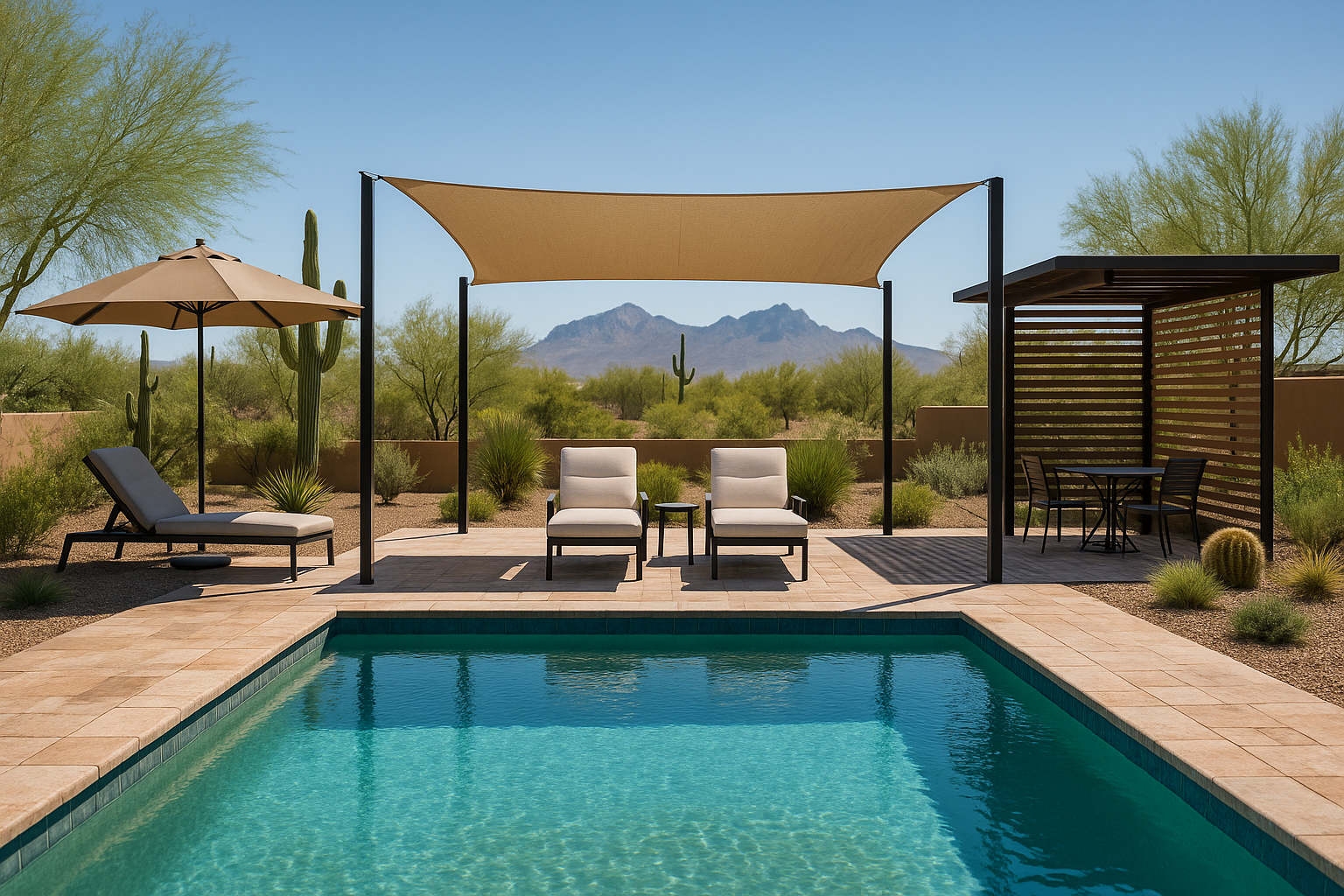
If you’ve lived through a few Phoenix summers, you know the pool is a lifesaver—until the deck turns into a skillet and the sun bounces off the water like a mirror. Shade changes everything. It cools the concrete, softens the glare, and turns your pool area into a place you actually linger. Not a cave. Not a sauna. Something in between—calm, breezy, and easy on the eyes. That’s the sweet spot we design for every day at Arizona Pergola Company.
Why Shade Matters More Here Than Almost Anywhere
Maricopa County sunshine is generous—wonderful for winter, fierce in July. UV hits hard, and the reflected light off a pool doubles down. Shade isn’t just for comfort; it helps protect your skin, your furniture, and even your pool finish. Cooler surfaces also mean fewer “hot-foot” dashes and less thermal stress on pavers and decking.
There’s a practical side, too. Smart shade reduces heat gain on nearby windows and sliding doors, which can ease the load on your AC. And yes, we’re always thinking about monsoon winds, dust, and HOA color rules. Shade has to look good, but it also has to last here.
Modern Pergolas That Actually Breathe
Shade should block sun, but not breeze. It’s a little contradictory—until you see how a good pergola handles both. We design structures that create moving shade and keep air flowing, so you can sit poolside without feeling boxed in.
Classic Lattice, Reimagined
Aluminum (including wood-look Styles like Alumawood) is the go-to for most backyards here. It resists rust, shrugs off UV, and needs almost no upkeep. Lattice spacing can be tuned for your yard’s compass direction—tighter where the afternoon sun hits hardest, wider where you want filtered morning light. Powder-coated posts in desert tones (think sand, clay, stone) blend beautifully with Scottsdale and Chandler stucco palettes.
Motorized Louvered Roofs
Want shade that adapts? A louvered pergola lets you tilt slats with a remote (Somfy motors are a popular choice) to chase the shade across the day. Close them for rain. Crack them open for a breeze. It’s a touch of luxury that also makes sense—especially when you’re hosting and need to fine-tune comfort without herding guests around like sunflowers.
Solid Tops with Clear Style
Sometimes you want hard shade that still feels light. Polycarbonate panels can filter UV while letting daylight through; they’re tough enough for monsoon season and don’t weigh down the design. Add a ceiling fan, low-profile LEDs, and a misting line, and you’ve got an outdoor room—right next to the pool, but not stuck indoors.
Shade Sails With Desert Flair
Shade sails are strong, sculptural, and surprisingly affordable for larger areas. Think Coolaroo or Sunbrella-grade fabrics that resist fade and mildew. Triangles can be layered, or we can create a “hypar” (twist) that looks like art and funnels hot air up and out. They’re brilliant over a pool Baja shelf or a kids’ splash zone.
Two quick notes. First, anchors matter. We engineer posts and hardware for real Valley winds, not a gentle ocean breeze. Second, sails should sit high enough to keep lines out of the splash path and allow safe walking. We’ll map sun angles, consider your neighbor’s sightlines, and place everything so it looks intentional—not like a camping trip in your backyard.
Big Shade, Small Footprint: Cantilever Umbrellas
When you need flexible shade without a permanent structure, an offset (cantilever) umbrella is a star. You can swing it over a lounge chair in the morning and rotate it over the spa by evening. Look for heavy bases or in-ground sleeves, UV-stable fabric, and wind ratings that make sense here. We also suggest covers for summer afternoons when gusts sweep through—quick to close, quick to protect.
Are umbrellas a full-time solution? Not usually. But they’re a great pinch hitter. Paired with a small pergola or a sail, they fill gaps and save the day during pool parties or unexpected sun shifts.
Hybrid Setups: Mix, Match, and Make It Yours
Some of the most striking pool areas we’ve built in Phoenix and Mesa combine elements. A louvered pergola for dining. A high sail over the deep end. A slim cantilever near the tanning ledge. The mix gives you layers of shade and texture, and it helps manage different times of day without moving furniture every hour.
Privacy screens can help too. Laser-cut aluminum panels or horizontal slat screens offer wind-sifted shade and block less-than-lovely views. Natural vines like bougainvillea look gorgeous, though they shed—great along a fence, not so great right above the water. You know what? A faux-wood aluminum screen can give you the same warmth with zero mess. Your pool filter will thank you.
Smart Extras That Make Shade Even Better
Once the structure is set, the little things seal the experience:
- Misting lines with anti-drip nozzles that don’t soak cushions
- Outdoor-rated fans to keep air moving during July afternoons
- Warm LED strip lighting on dimmers for soft nights
- Down-firing task lights near the grill or bar
- Heaters for those crisp January evenings when the spa calls
We’ve even added low-profile solar panels over solid spans to power lights and fans. It’s not for every layout, but when it works, it feels clever and clean—like the shade is paying the utility bill for the mood lighting.
Planning Like a Pro (Without the Headache)
Here’s the thing: a great design looks effortless because the planning wasn’t. We think about angles, wind paths, even splash zones, so you don’t have to. A few quick pointers:
- Mind the pool shell. Footings should be set away from the pool wall to avoid structural stress.
- Check HOA and city rules. Heights, Colors, and setbacks matter in places like Gilbert or Peoria.
- Respect the breeze. Structures should shade without trapping heat; open sides near the water help.
- Choose finishes that match your home’s trim and hardscape—cohesion makes everything look custom.
- Plan access for service routes (pool techs, cleaning gear) so nothing becomes an obstacle course.
We’ll survey, measure, and sketch with sun-path tools and real photos of your yard, then recommend what fits. Not just what fits the catalog.
What It Might Cost Around the Valley
Every yard is unique, but ballparks help. Shade sails usually start at a few thousand for a single, well-anchored panel and go up with size, height, and posts. Cantilever umbrellas range widely depending on size and wind rating.
Fixed aluminum pergolas near the pool often land in the mid-to-high four figures, while motorized louvered systems with lighting and fans can reach the low-to-mid five figures. If that sounds high, consider this: shade is the one upgrade you’ll use from March through November. It stretches pool season, protects your finishes, and makes your home feel bigger because you’ll live outside more.
We’re happy to break costs down line by line—Materials, anchors, electrical, lighting—so there are no surprises. Transparent and straightforward, like a good Arizona morning.
A Few Design Tips We Love Right Now
Trends change, but some ideas stick because they just work here:
- Earthy frames with lighter tops—keeps glare low but the space bright
- Desert-friendly plants in tall planters to soften posts (agave, desert spoons)
- Integrated towel hooks and hidden storage for sunscreen and toys
- A shaded “transition zone” from house to pool so wet feet don’t track heat into the kitchen
Small touches add up. You feel them even if you can’t name them. That’s the sign of a well-planned yard.
Ready to turn your pool area into real, livable shade? Arizona Pergola Company Designs and builds for Valley weather, HOA rules, and the way you actually use your backyard. Give us a call at 480-568-5870 or Request a Free Quote. We’ll bring samples, sketch ideas, and help you choose a shade design that looks like it was always meant to be there—because once it’s up, you’ll wonder how you lived without it.
