
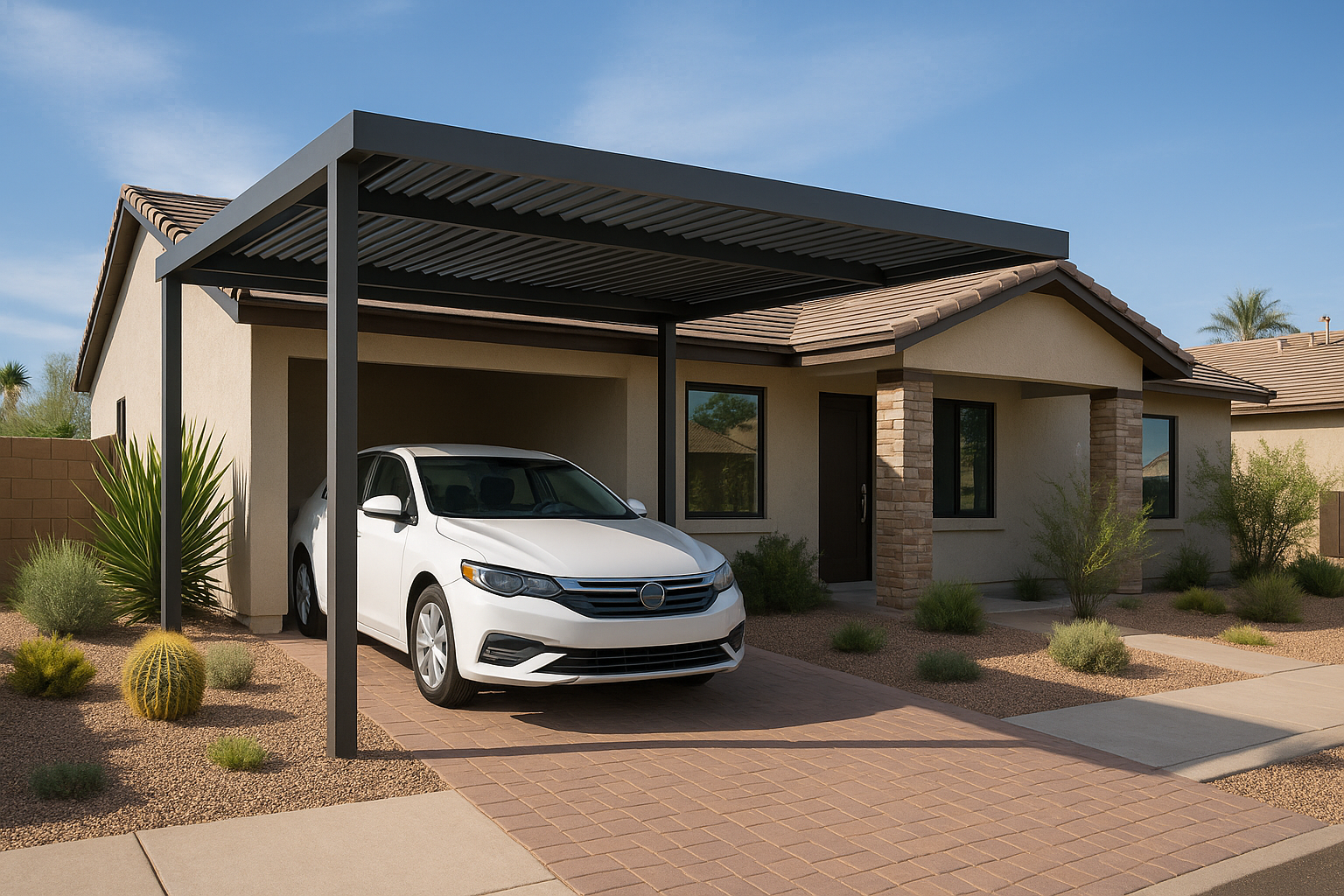
The right carport cover doesn’t just keep the paint from baking in the Arizona sun—it sets the tone for your whole home. In Maricopa County, where the driveway meets blazing summers and the occasional monsoon tantrum, curb appeal starts where you park. You know what? A well-designed cover can look like it came with the house from day one, and that’s the sweet spot. Let’s talk about striking Designs that look sharp, work hard, and make your neighbors slow down when they pass.
Why curb appeal starts at the driveway
The driveway is usually the first visual handshake. A handsome cover frames your front elevation, anchors the approach, and keeps everyday life (kids, groceries, muddy shoes) shaded and simple. It boosts resale value too, because buyers in Phoenix, Gilbert, and Glendale understand shade is comfort—and comfort sells.
Here’s the thing: curb appeal isn’t just pretty Colors and trendy hardware. It’s proportion, material, and how the structure meets the house. If your carport echoes your roofline or matches your stucco texture, it reads as intentional. When it contrasts gently—say, charcoal posts against a light exterior—it adds drama without shouting. And for many HOAs across Maricopa County, a thoughtful match of color and massing makes approval smoother.
Carport cover Styles that turn heads
Not every home wants the same silhouette. Your sun angles, driveway width, and front yard rhythm all point you toward the right structure. A few standouts we build a lot at Arizona Pergola Company:
Modern flat-roof with crisp lines
Think powder-coated aluminum beams, tidy fascia, and a low profile that hugs the architecture. Pair white, sand, or dove gray with a thin black trim for a look that’s clean without feeling cold. Flat-roof insulated panels keep the space 10–15 degrees cooler underneath, which you feel even on a 110-degree afternoon.
The cantilever (sleek, with a touch of swagger)
Posts at the back, nothing up front—so you swing in without door-dings or post paranoia. It demands real engineering, especially for monsoon gusts, but the payoff is pure visual lightness. We overbuild footings and use beefy steel to keep it stout while it looks like it’s floating.
Spanish-Mission nods without the weight
Arched beams, warm hues, and a fascia that mimics tile lines—great for Scottsdale or Tempe homes with stucco and curved details. You get the charm without the heavy load of actual clay tile by using insulated panels with a textured coating that plays well with existing stucco.
Shade-sail hybrids (artful and airy)
Sails strung from a slim steel frame bring a resort feel. Bronze or sandstone fabric knocks down UV, and the geometry can be dramatic. But let me explain: sails look effortless; they aren’t. Proper tensioning, angled posts, and reinforced footings keep them steady during microbursts. Done right, they’re stunning and sturdy.
Curved polycarbonate for filtered light
Bronze-tint polycarbonate panels over a gently arched frame let in daylight while blocking UV. It’s bright but not blinding. Great for gardeners who want a little light for potted succulents by the driveway. They do patina with dust storms—but a quick rinse brings back the clarity.
Materials that love the Maricopa sun
Materials by themselves don’t guarantee longevity; materials matched to climate do. We lean on powder-coated aluminum and steel because they shrug off UV and don’t warp. Alumawood (wood-look aluminum) gives you the warmth of cedar without the splinters or re-staining. It’s convincing, too—neighbors usually have to tap it to believe it’s metal.
For roofs, insulated panels like Structall Snap-N-Lock create a solid lid with a foam core that blocks radiant heat. Prefer flexibility? Motorized louvered roofs (like Equinox) tilt open for winter sun and close tight in summer. We seal seams, integrate gutters, and direct water to downspouts that actually go somewhere—a small thing until July clouds unload and you’re grateful you planned for it.
Hardware matters more than most folks think. Stainless fasteners, concealed brackets, and UV-rated sealants keep things quiet, tight, and handsome year-round.
Smart add-ons that make a small cover feel big
Little upgrades swing way above their cost. They add comfort, polish, and a “this-just-works” feeling:
- LED downlights on dimmers—soft at night, bright when you’re finding that last soccer cleat.
- Wet-rated ceiling fans for whisper-cool evenings.
- Built-in gutters and clean downspouts (no splash drama at the slab).
- Privacy screens or breeze blocks along one side for wind and curious eyes.
- A small storage bay for yard tools so your garage can be…a garage.
- Conduit for EV charging; future-you will thank you.
- House numbers or a mailbox in the same finish for a pulled-together look.
Honestly, a fan and well-placed lighting can make a carport feel like an outdoor room. Not a bad place to fold laundry on a cool January day.
Size, setbacks, and HOA sanity checks
A simple guide: a single bay wants at least 10×20 feet; 12×22 feels better. For two cars, 20×20 is the floor—20×24 is forgiving. If you own a truck with a toolbox, add a foot or two of length so the tailgate clears without kissing the post. RV covers usually stand 11–13 feet clear, and we’ll check your rig’s height with antennae and AC units in mind.
Permits vary by city—Phoenix, Mesa, Chandler, Peoria, Buckeye, you name it—yet most follow the International Residential Code with local twists. Corner lots, sight triangles, and utility easements can affect where posts land. We handle permitting and inspections so you don’t chase signatures.
HOAs want clarity. Submitting a simple plan, color swatches, and a rendering usually speeds things along. We prepare neat, readable packets that speak HOA language while keeping your style intact.
Budget talk (without the wince)
Numbers shift with size, finishes, and engineering, but ballparks help:
A clean aluminum single-bay cover often runs in the $8k–$15k range. Double-bays land around $14k–$28k depending on spans and lighting. Insulated roofs, stucco-wrapped columns, and concealed gutters can raise it to $18k–$40k. Cantilevers cost more than post-and-beam because of steel and footings, yet they give you a premium look and easier parking.
Solar carports are a different animal—structure plus panels—but they can offset air-conditioning bills in August. We’ll sketch both scenarios and run through trade-offs so you can see where your dollars do the most good.
Seasonal rhythm—designing for June, July, and, yes, January
Summer heat hits hard from the west in late afternoon; a deeper overhang on that side pays you back daily. Light-colored finishes reflect heat, while insulated roofs stop the bake. When July and August roll in with monsoon winds, lateral bracing and stout footings keep things calm. Screens on one side can cut gusts without boxing in the space.
Winter sun sits low, so a louvered roof can open to warm the slab and keep morning starts nicer. Dust? This is Arizona—an occasional hose-down or leaf blower keeps your cover looking sharp, especially after a haboob drifts through.
Real-world pairings we love in Maricopa neighborhoods
Gilbert modern farmhouse: wood-look aluminum beams with a matte black fascia and warm underlighting. It feels cozy at night, sharp by day.
Phoenix mid-century ranch: a slim cantilever in charcoal with bronze polycarbonate—period-correct lines with modern shade.
Scottsdale Spanish: stucco-wrapped posts, arched fascia, and an insulated roof finished to echo the home’s texture. It’s classic without feeling heavy.
Peoria RV cover: tall, quiet, and engineered like a pro—steel posts, insulated lid, and a side privacy bay that hides hoses and cords.
Why Arizona Pergola Company?
We’re locals. We design for sun paths in June, storm gusts in August, and HOA review cycles that sometimes stretch. Our team handles engineering, permits, and inspections across Maricopa County. We measure twice (okay, three times), produce crisp 3D renderings so you can see the look before we build, and clean up like we were never there. Materials are warrantied, finishes are field-proven, and our crews are friendly—because construction shouldn’t feel like chaos.
Ready to give your driveway star power?
If you’re picturing a shade structure that fits your home like it belongs, we’re ready to sketch it with you. Call Arizona Pergola Company at 480-568-5870 or Request a Free Quote. Let’s make coming home feel better—every single day.