
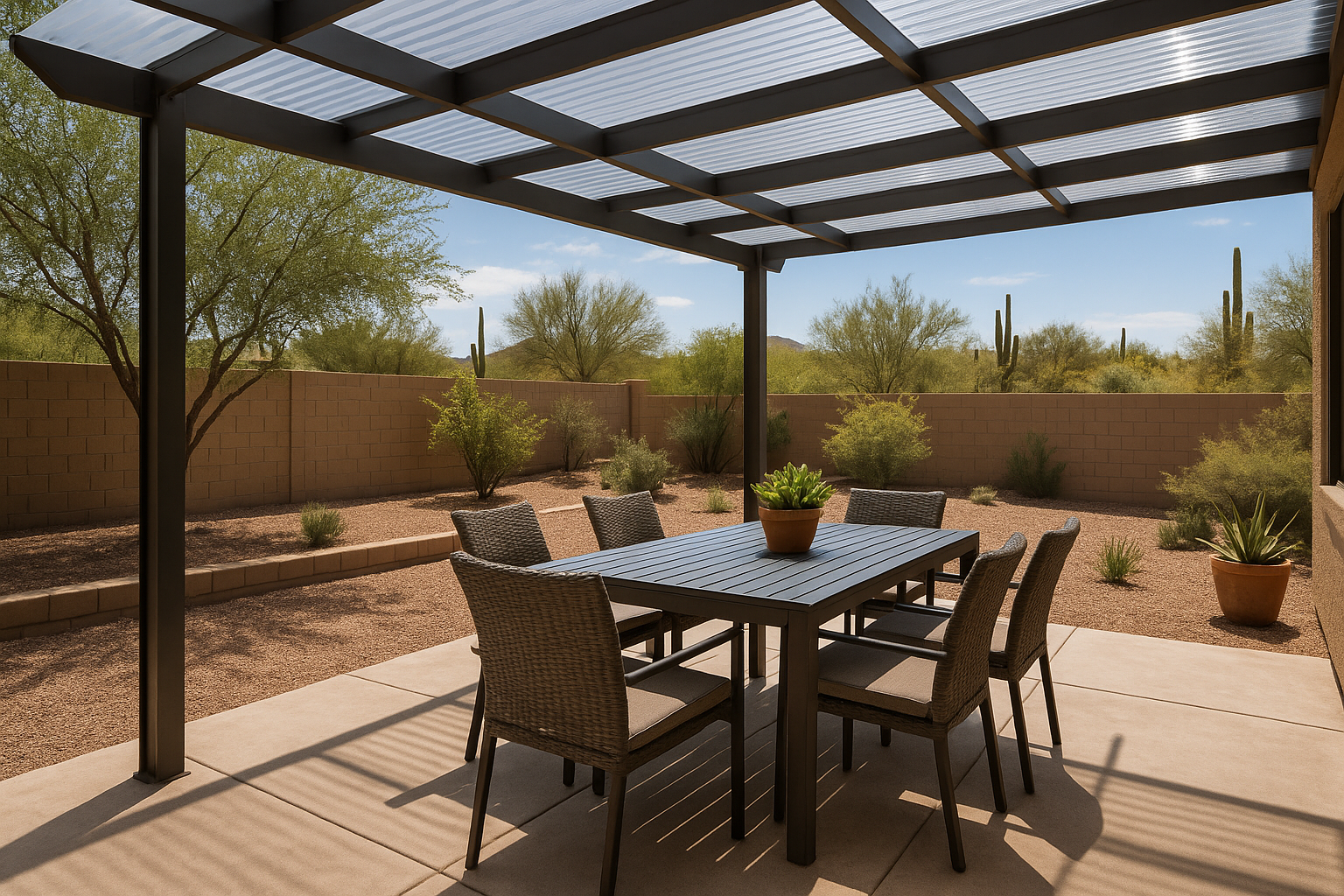
The Arizona sun is generous—some days, a little too generous. If you’re picturing a patio where mornings feel gentle and evenings glow, polycarbonate panels can be the secret sauce. They bring in daylight without the glare, shrug off monsoon tantrums, and keep your outdoor space feeling open. Around Maricopa County, that balance of shade and light isn’t wishful thinking—it’s smart design. Let’s talk through how to use these panels so your patio feels cool, bright, and built to last.
Why polycarbonate panels make sense in the Valley
Here’s the thing: polycarbonate is tough. It’s the kind of material used for greenhouses and stadium canopies, which already says a lot. For patios in Phoenix, Chandler, Mesa, and the far reaches of Surprise, it checks key boxes.
It blocks harsh UV rays while letting friendly daylight through. It handles hail far better than glass. It’s light, so it pairs beautifully with aluminum pergolas. And unlike full roofs that can feel cave-like, polycarbonate keeps your patio bright. You know what? On a 108-degree afternoon, that little lift from natural light matters more than it sounds.
Bonus: the right tint can lower heat gain without turning your view muddy. More on that in a second.
Choosing the right panel (and not overthinking it)
There are a few choices to make. The good news: once you know how you plan to use the patio—coffee at sunrise, pool shade by noon, games after dark—the right panel becomes pretty clear.
Thickness and structure
Most patios here use multiwall panels (think twinwall or triple-wall). They’re light and insulate better than solid sheets. Common thickness: 8mm to 16mm. Thicker panels reduce heat and noise more, and they resist sag over time. If you’re planning wider spans or want a quieter roof when rain hits, bump up a size.
Tint and light levels
- Clear: brightest, but warm. Good for north-facing patios or areas with extra shade from trees or walls.
- Bronze: cuts glare and heat nicely; Colors look rich underneath. Popular near pools and west-facing patios.
- Opal (white): soft, diffuse light; comfortable any time of day. A crowd favorite for all-around comfort.
Manufacturers list “light transmission” (how much light gets through). Aim for 35–60% for sunny exposures. Lower numbers mean cooler shade; higher numbers feel brighter.
UV protection
Most quality panels have a UV-protected side. Keep the film on during install, then peel it once you’re done. Sounds obvious, but on a hot job site, people get excited and forget. Don’t. It matters.
Shade without gloom: plan your light
We get brutal west sun here. East-facing spaces usually feel gentler, which opens up your choices. If your main heat hits late afternoon, consider bronze or opal, and add a small overhang on that side to block the low sun angle.
Want a patio that never feels dim? Mix Materials. A popular setup uses a polycarbonate “skylight” band down the center with solid roof panels on the sides. You keep daylight in the middle, plus deep shade at the edges for seating. Another trick: combine polycarbonate with a pergola that has adjustable louvers or spaced purlins. It adds texture and a play of light that looks amazing across pavers.
And if you’re worried about glare on your TV during game day—yes, we get that question—use opal panels above the screen area. Crisp picture, no squinting.
Design details that keep you cool and dry
Desert patios see blazing heat, quick bursts of monsoon rain, then dust the next minute. Good design handles all three.
- Slope: give panels at least 1/4 inch per foot for drainage. Water should head to a gutter or controlled spill edge.
- Overhangs: 8–12 inches help shade windows and protect doors. Small detail, big payoff.
- Seals and gaskets: use polycarbonate-friendly EPDM gaskets and closures. Standard silicone can react; use neutral-cure if needed.
- Thermal expansion: pre-drill oversized holes and use screws with neoprene washers. Panels move with heat. Let them breathe.
It sounds fussy, but it’s simple in practice. Those tiny steps prevent drips, rattles, and the dreaded panel warp. And they help a lot when a surprise haboob rolls through at 4 p.m. on a Tuesday.
Hardware that holds up in monsoon season
Think sturdy and rust-resistant. We favor powder-coated aluminum frames—cool to the touch, low maintenance, and color-stable. Stainless or coated fasteners keep things tight. For panel connections, use proper H-profiles and U-channels. They lock edges cleanly and steer water away from seams.
Support spacing matters too. Multiwall panels like closer purlins than you might guess. It keeps the surface flatter and cuts noise. If you’re near open desert or a wash, we’ll plan for wind uplift. That means stronger attachment at the rafters and sometimes extra blocking where gusts can sneak under edges.
One more local note: if your patio faces south and gets buffeted between two homes, wind sneaks in at the corners. We can add clear wind baffles there. You barely notice them, but chairs stop skittering across the pavers.
HOA-friendly looks without losing personality
Most HOAs want neutral colors and clean lines. No problem. Bronze or opal panels pair well with tan or off-white frames, and they blend with stucco and clay tile roofs. If you love a warm, wood look, wood-grain aluminum beams give that vibe without the upkeep. Subtle fascia trim and a gutter profile that matches your home’s metalwork make the whole patio look original to the house.
We’ve also found small style notes go a long way—arched corner brackets for a Spanish feel, or squared posts for a modern touch. Sometimes the difference between “nice” and “wow” is that 1-inch frame reveal.
Care and longevity in the desert
Maintenance is easy. Rinse dust, use mild soap, and a soft brush. Skip ammonia-based cleaners; they can cloud panels. Don’t use abrasive pads. If you get tree sap (hello, citrus season), warm water and patience beat harsh chemicals.
Quality panels come with UV warranties—often 10 years or more against yellowing. In our climate, that’s real peace of mind. If a branch drops during a storm, replacement is straightforward. Panels are modular, so we can swap a section without pulling the whole roof.
Budget notes and timelines (straight talk)
Pricing varies by size, frame style, and panel type, but here’s a general feel: a modest shade cover with multiwall panels lands well below a full solid roof system. Larger spans, thicker panels, and custom color frames cost more—no surprise there.
Permits and HOA approvals can add time. We handle those often, so we’ll help keep it smooth. From first measure to install, many projects wrap in a few weeks once approvals and materials line up. Summer is busy—spring and fall move faster. If you’re timing for graduation parties or the first cool October weekend, let’s plan ahead.
Little extras that make a patio feel finished
Once the shade is set, the fun starts. A few add-ons can turn “nice cover” into your favorite room.
- Ceiling fans rated for outdoor use—huge comfort boost.
- LED strip lighting tucked into beams; soft, low-glare evenings.
- Misting lines routed cleanly along rafters; easy to service later.
- Privacy screens on the sunniest edge; they cut wind and eyestrain.
- Gutters that match your fascia; no splashback on pavers.
I’ll admit a soft spot for string lights over an opal panel roof. The glow is gentle and cozy—like a neighborhood patio in Tempe on a Friday night.
Ready to sketch your perfect shade?
If you’ve been staring at your yard thinking, “We could actually live out here,” you’re our kind of person. Arizona Pergola Company Designs and installs polycarbonate patio covers that fit your home, your sun angles, and your budget. Call us at 480-568-5870 or Request a Free Quote. We’ll bring samples, map the light, and help you build a patio that feels right—morning to night, summer to winter.
