
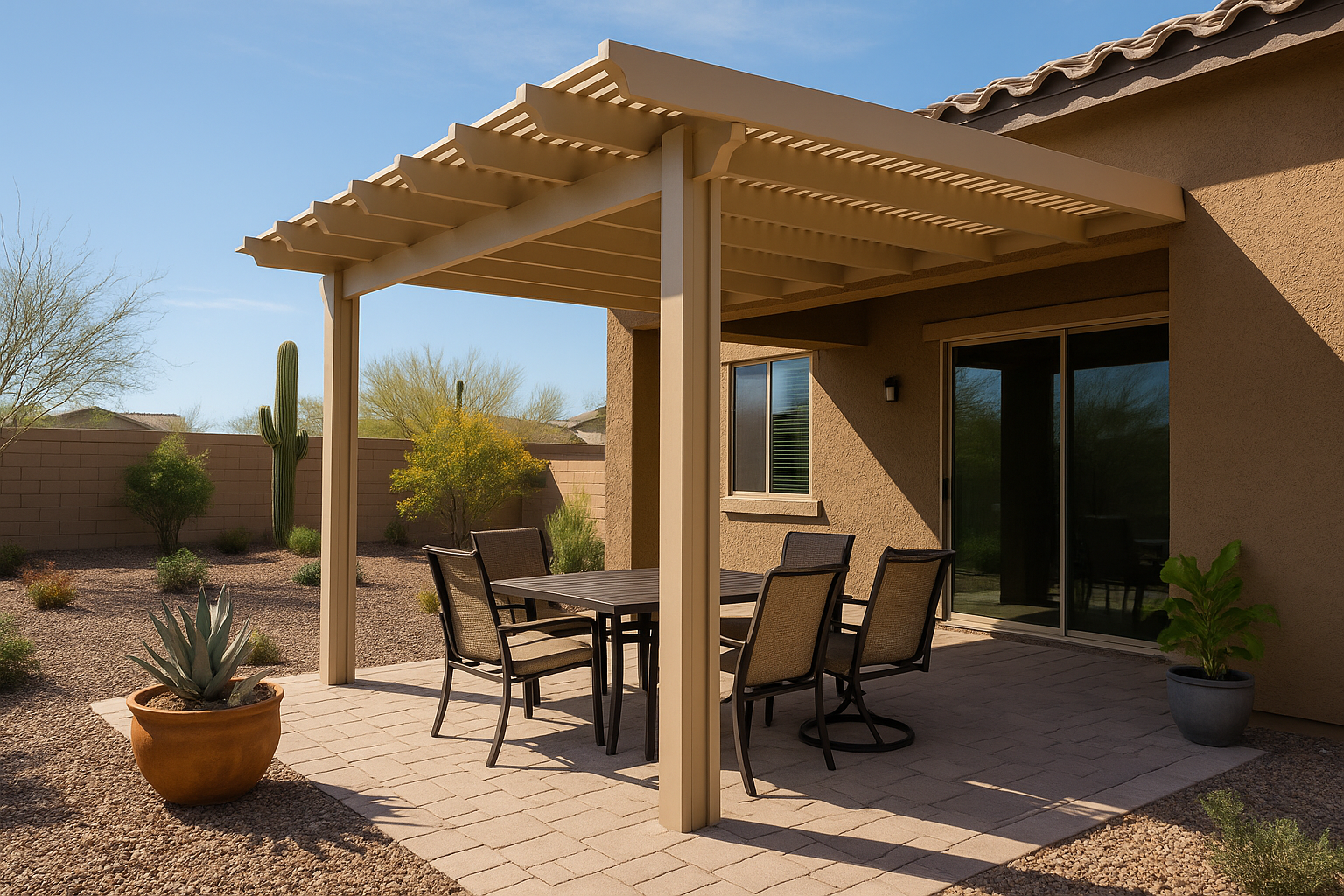
Summer in Maricopa County doesn’t mess around. The sun shows up early, stays late, and turns patios into hot plates by noon. But here’s the thing: a well-designed patio cover delivers a lot more than shade. It can change how you live at home—how you relax, gather, even how your house feels inside. You know what? It can make your backyard the favorite “room” of your house, even when the mercury is flirting with triple digits.
More Than Shade: Comfort You Can Feel
Yes, a patio cover tackles the obvious—blocking direct sun. But the comfort boost runs deeper. By shading concrete, pavers, and stucco walls, you reduce the amount of heat those surfaces soak up. That means less heat radiating back at you in the afternoon (and into your home at night). It’s not magic; it just feels like it when your feet aren’t dancing across a scorching patio.
There’s also skin and furniture to think about. UV rays don’t ask permission. A cover can help protect your family from harsh rays while extending the life of your grills, cushions, and that outdoor rug you actually like. Fade happens slower. Materials last longer. And glare—especially on west-facing patios in Phoenix, Peoria, or Buckeye—drops from “squinting contest” to “pleasant glow.”
It’s funny, though: while a patio cover blocks light, it can make the space feel brighter—softer reflected light from the cover’s underside gives even shade a warm, open look. Add a ceiling fan, and you’ve got movement and comfort without chasing hats across the yard.
The Quiet Energy Saver (Your APS or SRP Bill Notices)
Shade outside helps inside. When a cover shields west- and south-facing glass, you cut the solar heat gain that cranks up your AC. Homeowners across Mesa and Chandler tell us they feel a few degrees of difference in afternoon rooms. That’s enough to give your system a break—especially from June to September when your air conditioner works overtime.
Two small tips we share on site visits:
- Lighter-colored roof panels or beams reflect more sun, reducing heat soak.
- Strategic placement beats sheer size. If the goal is cooler interiors, covering the wall with the most glass often makes the biggest difference.
Bonus points for insulated roof panels or integrated gutters. Insulated panels dampen heat above and noise from summer rain (yes, those glorious monsoon storms), while gutters send water where you want it—away from foundations and walkways.
Built for the Desert: Materials That Actually Last Here
Our sun is relentless, so materials matter. Traditional wood can look beautiful, but in the Valley it demands steady upkeep: paint, sealers, the whole routine. Termites also think of it as a buffet. That’s why many Maricopa County homeowners go with aluminum (including wood-look “alumawood”) or steel for strength and low maintenance.
Aluminum won’t crack, warp, or attract termites; powder-coated finishes shrug off UV far better than paint. Steel frames excel when you want large spans with minimal posts—sleek, sturdy, and monsoon-ready when engineered right.
Speaking of monsoons, design for wind. We engineer for gusts, set proper footings, and flash ledgers to keep water out of the wall system. That means a structure that doesn’t just look right—it holds up. And if you’re interested in something dynamic, motorized louvered roofs let you angle slats for sun or rain. You can enjoy a breeze, shut it tight during a storm, then open it for that perfect golden-hour light in Scottsdale or Gilbert.
Little Luxuries: Fans, Lights, and Misters (Yes, Please)
Comfort is layered. Shade is the foundation; the rest builds the vibe. Ceiling fans move air and help sweat do its job. LED lighting (recessed or pendant) turns dinner outside into easy habit, not a special event. And, yes—misters. A well-designed misting system can drop the perceived temperature by several degrees without soaking everything. Aim nozzles away from TVs and grills, and use quality pumps so mist stays fine, not drippy.
Privacy screens or motorized side shades help on tight lots in Tempe or Glendale, blocking low sun and nosy views while still letting air flow. Add a heater for those crisp winter evenings (they exist!) and you’ve got a true four-season retreat.
HOA-Friendly and Good-Looking—Both Can Happen
HOAs across the Valley usually want submittals: drawings, paint codes, and sometimes structural notes. We handle that legwork all the time. The payoff? A cover that looks like it belongs—matching stucco textures, complementary beams, and Colors that blend with your home’s palette instead of fighting it.
Some folks love a clean, modern line with slim posts. Others want a classic feel with decorative rafter tails or stucco columns. Either way, curb appeal matters. A thoughtful design doesn’t just pass HOA review; it makes your house look finished, almost like the architect planned it that way from the start.
Resale Value and Everyday Value Aren’t the Same—You Get Both
Can a patio cover boost resale value? In a market where outdoor living sells—especially around Phoenix, Queen Creek, and Surprise—it certainly helps. Buyers see shade, function, and a move-in-ready lifestyle. That’s real value.
But the day-to-day value may be bigger. Morning coffee feels nicer. Kids can play outside longer. Dogs stop frying their paws on the patio. Plants do better—citrus and potted herbs especially—with filtered light instead of brutal midday sun. And when friends come over, you’re not herding everyone indoors by two o’clock.
Where Should It Go? A Quick Placement Playbook
Sun angles in the Valley are predictable, which helps. West-facing yards get the hardest afternoon heat; shade that wall or those windows to protect interiors. South-facing patios benefit from deeper overhangs. East-facing spots feel lovely in the morning; you might choose a lattice or louvered style to keep it bright while taking the edge off.
Think airflow, too. In the evenings, we often get a gentle breeze—let it pass through. If you have a pool, allow for clear walkways and sightlines. Drainage matters after monsoon downpours; we plan downspouts so water doesn’t flood the barbecue or wash out your decomposed granite. And yes, setbacks and fire clearances are a thing. We’ll verify your lot lines and local code so your cover goes where it should—happily and legally.
Care and Cleaning: Simple and Satisfying
Dust happens. When a haboob rolls through, give your cover a quick rinse with a garden hose. A soft brush handles stubborn spots, and a leaf blower clears debris from lattice beams. Clean gutters before monsoon season and you’re golden. Aluminum finishes usually need little more than that; for moving parts in louvered systems, a quick check and light lubrication as directed by the manufacturer keeps everything smooth.
Why Homeowners Trust Arizona Pergola Company
We live here, we build here, and we know what the desert throws at a structure. Our team handles design, permitting, and installation across Maricopa County—Phoenix, Mesa, Tempe, Chandler, Gilbert, Scottsdale, Glendale, Peoria, Surprise, and beyond. We bring practical field experience, clean workmanship, and clear communication. Want to see it before it’s built? We can show you layouts and finishes so the plan makes sense in real life, not just on paper.
Materials we recommend are made for harsh UV and monsoon winds, with hardware and footings sized to our conditions. We can integrate fans, lights, heaters, and misters from brands homeowners trust, and we’ll talk through the small choices (beam color, post placement, gutter routing) that make a big difference day to day. Honestly, it’s your backyard—we’re here to make it feel easy, comfortable, and you.
Ready to Reclaim Your Backyard?
If you’re picturing dinners outside without the melting, or a quiet morning corner that isn’t blazing by 9 a.m., we’d love to help. Call Arizona Pergola Company at 480-568-5870, or Request a Free Quote and we’ll line up a friendly site visit. A cooler, better-looking patio is closer than you think—let’s build the shade you’ll actually enjoy.