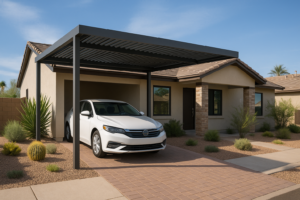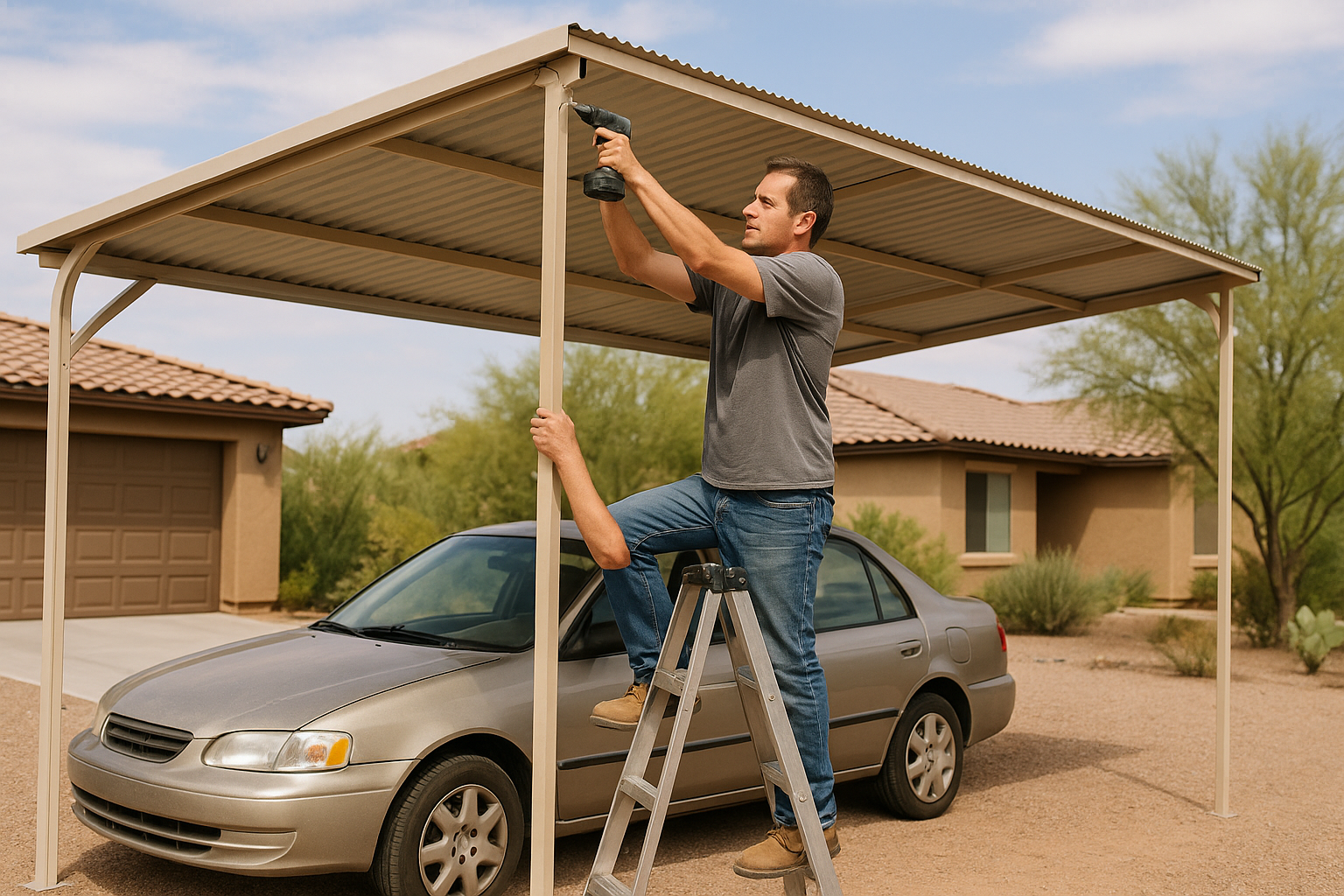
Shade matters in Maricopa County. Your car knows it, your steering wheel knows it, and so does anyone who’s tried to hop in after lunch in July. A carport canopy is a smart fix—clean lines, solid shade, and way less commitment than a full garage. Can you install one yourself? In many cases, yes. It’s a straightforward project with a few moments that ask for patience and precision. It looks simple. It is—and it isn’t. Let me explain how to handle the parts that make the difference, from planning around monsoon winds to picking Materials that won’t chalk out by next summer.
Is a DIY carport canopy a weekend job?
If you’re handy with a drill and a level, and you can follow a plan, you’re in good shape. Most basic aluminum or steel canopy kits can be done over a weekend—one day for layout and anchoring, one day for the frame and cover. Wood frames take longer and need sealing, so plan a couple extra sessions for that. The real wildcard here is the site: concrete pads make anchoring fast; bare soil means digging footings and mixing concrete. Weather, too—heat drains energy, and wind will turn a large panel into a kite, so pick a calm morning and keep water on hand. Phoenix heat is no joke.
You know what? It’s totally okay to press pause mid-build. A clean, square frame beats a rushed finish every time.
Plan first, swing hammers later
Start with two checks: 811 for utility locates (yes, even for footings) and your local city or HOA rules. Setbacks and height limits vary around the Valley. Phoenix, Mesa, and Chandler may treat canopies as accessory structures. Some HOAs want matching Colors or hidden footings. None of that is hard—just better to know now than after anchors go in.
Next, choose a spot. Face west-facing parking with extra care; that late sun is harsh. Leave room for car doors to open and people to pass. Watch roof runoff and drainage—don’t trap water under the canopy. If you plan to add lights later, note the route for conduit and where you’ll mount a switch (and keep clearance from APS or SRP lines). Measure twice, then measure again diagonally to make sure the layout is square. A simple string layout with stakes works great.
Materials that survive the Valley sun
Aluminum frames are light, rust-free, and easy to work with—popular for DIY. Powder-coated steel is stronger and better in wind but heavier to lift. Treated wood feels warm and classic, yet it needs routine sealing, or Phoenix sun will do what Phoenix sun does.
For the canopy itself, you’ve got choices:
- Polycarbonate panels (UV-rated) for bright shade and clean, modern lines.
- Metal panels for rock-solid protection and great longevity.
- Heavy shade fabric (HDPE) for airflow and softer light; tension is key.
Look for UV stabilization on anything exposed. Light, reflective colors help keep temps down. Think of it like sunscreen—for your car and for your project. And if you’re near the White Tanks or open desert, dust is constant; smooth surfaces are easier to hose down after a haboob.
Tools that make it smoother
Basic kit pieces usually include fasteners, but having the right tools turns a long day into a neat afternoon:
- Hammer drill (DeWalt or Milwaukee) with masonry bits for concrete anchoring
- Impact driver and sockets for lag screws and brackets
- String line, stakes, measuring tape, and a 4-foot level (a laser level is icing on the cake)
- Post-hole digger or auger if you’re pouring footings
- Wrenches, rubber mallet, tin snips (for metal panels), and a metal file
- PPE: gloves, eye protection, and, seriously, sunscreen and water
Anchoring gear varies: Tapcon screws or Red Head wedge anchors for concrete; Simpson Strong‑Tie brackets and Quikrete 5000 for footings. Buy extra fasteners—you’ll thank yourself.
Anchoring: slab, soil, or something in between
This is where DIY projects succeed or start to wobble. Maricopa County gets gusts over 60 mph during monsoon storms. Anchors matter.
On a concrete slab in good condition, wedge anchors are strong and fast. Blow out the dust after drilling holes—dust kills grip. If your slab is thin or cracked, move to footings: 12–18 inches round, 18–24 inches deep works well for most canopies here, though some kits specify more. Set metal post bases into wet concrete so they cure dead-center and aligned.
On compacted soil, dig footings and tie posts to Simpson Strong‑Tie bases with hot‑dipped galvanized hardware. Avoid anchoring straight into pavers; they’re not structural. Asphalt? Skip surface anchors. Cut and pour footing piers through it. Give concrete at least 24 hours to set, 72 if the post will take immediate load. It’s hard to wait, but it’s worth it.
The build, step by step—without sugarcoating
Every kit is a little different, but the flow stays the same. Keep a chalk line, a level, and patience on your side.
- Layout: Mark post centers. Square the rectangle by matching diagonals. Adjust until they match.
- Set posts: Plumb each one and brace it. Whether you’re using anchors or wet footings, straight posts now mean easy beams later.
- Attach beams: Run front and back beams and check for level. A tiny shim beats a crooked roofline.
- Add rafters or purlins: Space them per spec. Too wide and panels may flex; too close and you waste time and hardware.
- Install the canopy: For polycarbonate, leave expansion gaps and use the right gasketed screws. For metal panels, stagger seams and start square. For fabric, tension evenly—wrinkles mean wind noise.
- Finish details: Cap ends, seal penetrations, and touch up any scratches on coated metal.
It’s funny—most frustration comes from rushing the first hour. Slow setup, fast finish. That’s the rhythm.
Weatherproofing and wind-smarts
Think like rain and wind. Where will water go? Add a slight pitch—at least 1 inch per foot for panel roofs—to shed water fast. Use butyl tape or foam closures under metal panels at ridges and eaves. Seal wall connections with flashing if you’re tying into the house, and keep fasteners perpendicular; angled screws don’t seal right.
For wind, brace corners with diagonal straps, and use lock nuts where vibration could work fasteners loose. On fabric canopies, recheck tension after the first week. Heat relaxes fabric a bit. One more tug and it’ll stay quiet when the afternoon gusts roll in.
Common goofs (and quick fixes)
Posts leaning after concrete cures? Shim at the base with stainless shims, then hide the fix with a neat trim collar. Panel leaks at screws? Replace with neoprene‑washered screws and snug, don’t crush. Fabric flaps? Add a mid‑span support cable or retension the corners evenly.
Another big one: misreading sun angles. A canopy placed tight on the south side might still roast the driver’s seat at 4 p.m. Slide the footprint a foot west if you can, or add a side shade screen. Small changes, big comfort.
Care after the dust settles
Monsoon dust gets everywhere. Rinse panels with a soft spray; don’t blast with a pressure washer at close range. Check fasteners twice a year—spring and fall—and touch up any chipped coating before rust takes hold. Shade fabric likes a gentle soap wash now and then. And if tree sap shows up (hello, olive and mesquite), a bit of warm soapy water beats harsh solvents.
When it’s smarter to call a pro (and yep, we’re local)
Projects grow. Maybe you want integrated lighting, a storage bay, or you’re working with a weird slope and a tight setback. Maybe the HOA wants drawings you don’t have time to wrangle. Or you just want it done fast, square, and guaranteed. That’s where Arizona Pergola Company comes in. We work across Maricopa County—Phoenix, Gilbert, Peoria, Scottsdale, you name it—with permit-friendly plans, engineered hardware, and finishes that actually last in our sun.
Ready to shade that ride? Let’s talk at Arizona Pergola Company
If your weekend’s free and this guide feels like your speed, go for it—we’re cheering you on. And if you want a sturdier frame, a cleaner install, or a design that nods to your home’s style, we’re here to help. Call us at 480-568-5870 and speak with a local specialist, or Request a Free Quote. We’ll walk the site, talk through materials, and give you a clear plan—no surprises, just solid shade that stands up to Phoenix heat and monsoon winds.