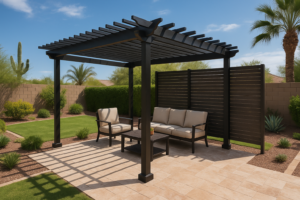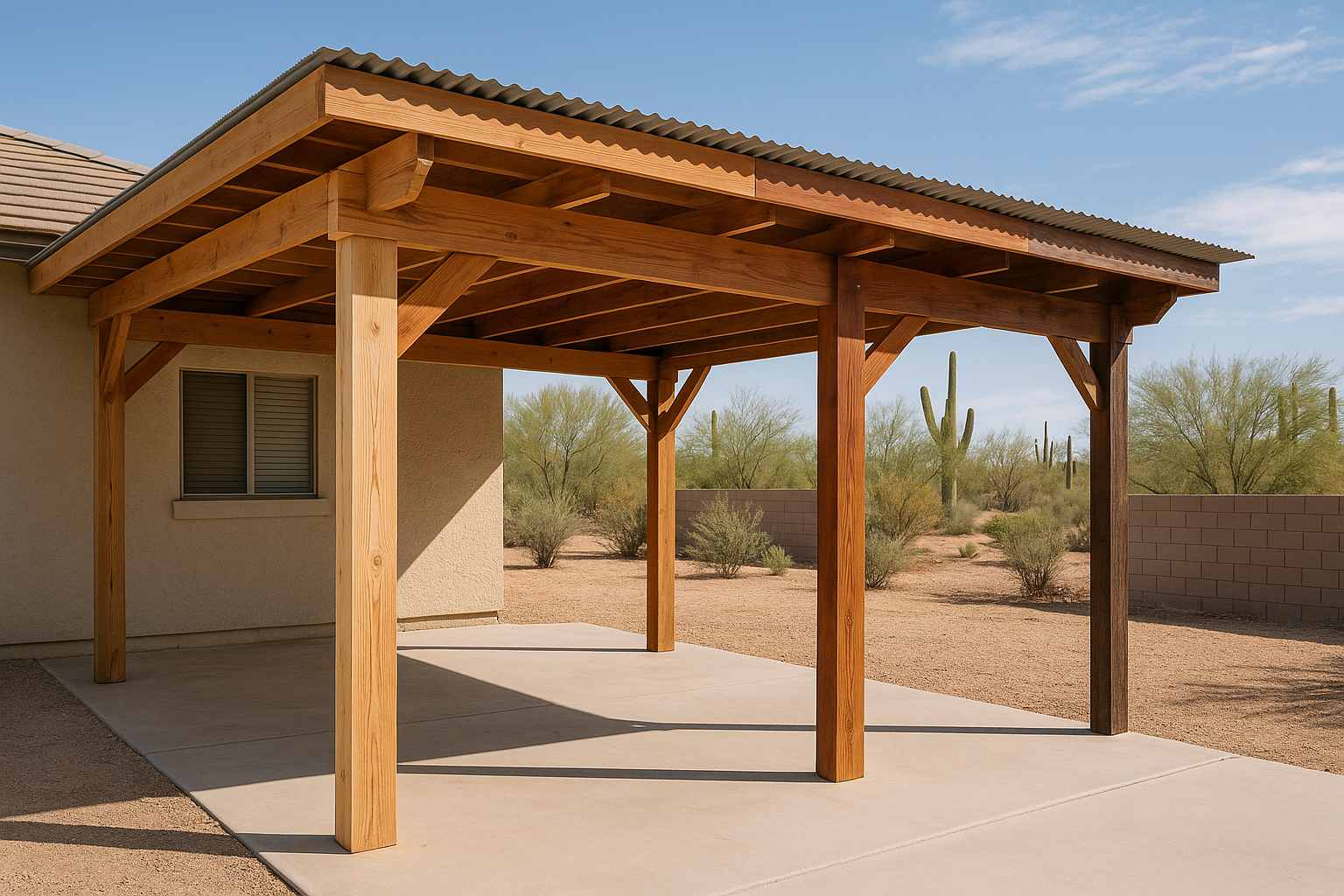
If you’re picturing a handsome wooden carport cover shading your vehicles from that relentless Maricopa County sun, you’re not alone. Wood feels warm. It looks right with desert landscaping. And honestly, it ages with character—if you pick the right species and treat it well. The question is simple but real: which wood makes the most sense for our heat, our monsoon bursts, and the swarm of little issues that live in the desert? Let me explain, and I’ll keep it plain-English.
Arizona weather vs. wood: a quick reality check
Our climate is tough on wood. Long months of high UV cook finishes. Dry air can shrink boards, then monsoon moisture rushes in and swells them. Wind loads matter. Termites are here, even if your yard looks clean. None of that means “don’t build in wood.” It means pick smart and finish smarter.
Here’s the thing: wood movement is normal. Tiny checks and hairline cracks are part of life in the desert. What you want is a species that stays strong, holds fasteners, and takes finish well, so maintenance is measured in years, not months.
The contenders: common woods for carport covers
Cedar (usually Western Red Cedar)
People love cedar for a reason. It’s naturally decay-resistant, light for its strength, and easy to work with. It shrinks less than many softwoods, which helps joints stay tight. Under our sun, cedar needs a good UV-blocking stain, but the upkeep cycle is kind. Every two to four years is typical if you choose a quality product.
Look: warm, knotty, very “Southwest backyard.” Cost: mid to high. Availability in Phoenix area: good, though premium sizes can take a week or two.
Redwood
The classic. It resists rot and insects very well thanks to its natural tannins. It’s also dimensionally stable, which helps big spans look straight over time. Downsides? It’s pricier than cedar and, depending on grade, supply can be uneven.
Look: rich, elegant, almost no-fuss style. Cost: high. If you love the deep red tone and want long-term calm, Redwood delivers—just budget for it.
Douglas Fir
Sleep on Douglas fir and you’ll miss a workhorse. Structurally, it’s strong, with a higher bending strength than cedar or redwood. That means longer spans or fewer posts—nice for parking space. It’s not naturally rot-resistant, so you need a top-notch finish and smart details (raised post bases, good drainage). Many pros, including our team, use fir for beams and rafters, then wrap exposed fascia in cedar for a “best of both” look.
Look: straighter grain, takes paint or stain well. Cost: moderate. Availability: strong in construction-grade and engineered forms.
Pressure-Treated Pine (often Southern Yellow Pine)
Treated lumber laughs at moisture and pests. It’s the budget-friendly tank. But it can be heavier, sometimes a little twisty as it dries, and it needs a seasoning period before finishing so the stain sticks. Choose kiln-dried after treatment (KDAT) when you can; it behaves better in our dry heat.
Look: classic pine, more knots; takes semi-solid stains well. Cost: low to moderate. Great value if you’re okay with a slightly more rustic vibe.
Cypress (when you can get it)
Cypress has natural oils that resist decay, similar to cedar. It machines nicely and smells great fresh-cut—small bonus. Availability in Arizona can fluctuate, so check lead times.
Look: light, creamy tan with subtle grain. Cost: mid to high. Treat it like cedar from a finish standpoint.
Strength matters: spans, beams, and why spacing isn’t random
Your carport isn’t a picnic table; it’s a little building. Species choice affects how far a beam can span and how lively it feels under load. Douglas fir shines here, and engineered wood—glulam or LVL—can push spans farther while staying straight. Glulam beams don’t just look cool; they’re consistent and resist warping. For wide bays where you don’t want center posts stealing parking space, this matters.
Fasteners and hardware also tell the story. We often use Simpson Strong‑Tie connectors, hot‑dipped galvanized or stainless where it counts. In wind, those hidden straps and hangers are the quiet heroes.
Finish, color, and upkeep: what actually survives our sun
Film-forming paints can look perfect—until UV beats them up and they peel. Penetrating stains and oils with UV inhibitors tend to weather more gracefully here. Semi-transparent stains show the grain; semi-solid covers more while still reading “wood.”
We’ve had good results with products like Behr Premium Semi-Transparent, Cabot Australian Timber Oil, and Penofin for hardwood-like depth on cedar and redwood. For fir or treated pine, a high-quality exterior stain plus back-priming cut ends is a must. Recoat cycles vary, but plan two to four years between light maintenance coats. Quick rinse, mild soap, soft brush—then recoat before it goes gray. Stay ahead of it and you’ll stay happy.
One more thing: lighter Colors reflect heat better, so hardware and boards stay a bit cooler. In July, that’s not a small win.
Termites and moisture: quiet enemies you can outsmart
Subterranean termites are real around Phoenix and the East Valley. They like wood that sits close to soil and stays damp. That’s why we:
- Use raised post bases on concrete footings (no direct soil contact)
- Seal all end grain and cuts on site
- Consider borate treatments (Bora-Care or Tim-bor) inside concealed cavities
- Detail for drainage—no standing water against posts or beams
Pressure-treated posts in contact-prone spots are a smart play. And if you’re worried, schedule a simple annual termite check. It’s quick, and it protects more than just your carport.
Cost reality in Maricopa County
Material prices move, but here’s a local snapshot many homeowners find helpful:
- Pressure-treated pine: most budget-friendly; maintenance is steady but manageable
- Douglas fir: fair value with strong spans; wrap with cedar if you want a premium face
- Cedar: mid to high; lower maintenance, beautiful grain
- Redwood: highest material cost; great longevity and look
Permits? Most cities—Phoenix, Mesa, Chandler, Gilbert, Scottsdale, Peoria—require permits for carports. Wind load calcs and setback rules apply. HOAs usually want a submittal with drawings and color samples. Not exciting, but we handle it every week, so it doesn’t have to be a headache.
Quick picks by priority (real-world answers)
- I want the lowest fuss over 10 years: Cedar with a quality semi-transparent stain
- I want long, clean spans: Douglas fir or glulam beams, cedar fascia for finish
- I’m budget-focused but still want solid: Pressure-treated pine structure with a semi-solid stain
- I love a luxury, timeless look: Redwood, simple lines, stainless hardware accents
- I’m termite-nervous: Treated posts, raised bases, borate in concealed spots—then cedar wraps for style
You know what? None of these are wrong. It’s about the mix that suits your house, your HOA, and your patience for upkeep.
Design touches that make wood feel custom
Small choices do big work. Rafter tails with a gentle curve. A beefy 2x fascia that casts a crisp shadow line at 4 p.m. Shade slats set at a tighter rhythm on the west side, looser on the north. Hidden LED puck lights for soft wash at night. Corbels you actually notice. Even the hardware—black powder-coated straps—can lean modern or ranch, and both look right in the Valley.
One more subtle move: mix species. A fir or treated pine backbone with cedar in the “touch and see” zones creates a premium look without a premium bill.
What we’ve seen locally (and what we’d build again)
Across Maricopa County, certain patterns keep showing up. In Scottsdale and north Phoenix, cedar holds finish and color beautifully with routine care—stays crisp. In Gilbert and Queen Creek, where wind can whip through, Douglas fir or glulam beams feel rock-solid for those wider bays. In older neighborhoods with tight HOAs (hello, Tempe), a painted fir structure with clean trim lines often slides right through approvals and still looks great.
We’ve also seen pressure-treated pine outlast expectations when the detailing is right: raised bases, sealed cuts, and a stain schedule that never gets skipped. And yes, we’ve replaced a few unsealed redwood builds that went gray too fast. Even the “best” wood won’t forgive a forgotten finish. Mild contradiction, but true: the species matters, yet the craft matters more.
So, which wood is best for you?
If you want a straightforward call: Cedar hits the sweet spot for many Maricopa County homeowners. Strong enough, lovely grain, friendly upkeep. But if you need long spans—or you’re chasing a clean, modern frame—Douglas fir or glulam with cedar accents is a winner. Redwood is the splurge that still earns its keep, while pressure-treated pine keeps budgets grounded without giving up durability.
Still torn? That’s normal. We can show you real samples in sun, not just in a showroom. It’s amazing what color does outdoors at 3 p.m. in August.
Ready to see it in your driveway?
Arizona Pergola Company Designs, engineers, and builds wooden carport covers across Maricopa County, tuned for our wind, sun, and HOA rules. Let’s talk about spans, finishes, and that little design detail that makes you smile every time you pull in.
Call us at 480-568-5870 or Request a Free Quote. We’ll help you choose the right wood—and make it look like it always belonged at your home.