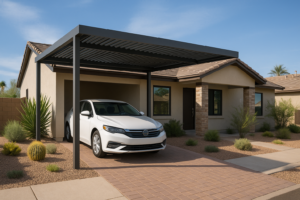
The desert sun here in Maricopa County is both our friend and our challenge. It fills our yards with light and warmth—until July hits and you can fry an egg on the pavers. That’s why more homeowners are asking a simple question with a smart twist: what if your patio cover gave you shade and made electricity at the same time? You know what? That’s not a future concept. It’s here, and it’s changing how we live outside.
Why solar patio covers make extra sense in Maricopa County
We live in prime solar country. Clear skies, long days, and a sun that shows up like clockwork. A patio cover built with solar panels turns that sunlight—so abundant it’s almost a character in daily life—into useful power while giving you a cool, comfortable place to sit with a cold drink. That’s a two-for-one that actually pays you back.
Here’s the thing: utility plans in our area are a mix of time-of-use rates, demand charges, and export credits that aren’t always equal to what you pay for power. A solar patio cover can help you run the essentials during peak hours, soften those demand spikes from the AC, and stretch your budget when it’s hottest outside. And when the grid’s working hard on a 116-degree afternoon, making some of your own power just feels smart.
HOAs? Arizona law supports your right to go solar. Associations can guide style and placement, but they can’t block solar outright. We work within community guidelines so the structure looks like it belongs—because it should.
So…what is a solar-powered patio cover, exactly?
The core components
Think of a well-built patio cover—aluminum or steel frame, posts set deep, clean lines. Now swap some (or all) of the roof surface for weather-rated solar modules that also act as the “lid.” Add wiring tucked out of sight, a code-compliant inverter, and a tidy conduit run to your service panel. Optional battery? Sure. It’s not required, but it helps during outages and with peak shaving.
- Structure: engineered for wind, weight, and local code
- Solar modules: glass-on-glass or framed panels that handle heat and monsoon gusts
- Inverter: converts DC to AC; can be string, microinverters, or hybrid units
- Gutters/flashings: quiet drainage and a dry seating area when summer storms pop
Styles that fit your yard
We design solid-roof covers for full shade, integrated-panel lattice looks for filtered light, and adjustable louvered systems that angle open for a breeze or close for rain. Want lighting, ceiling fans, or a misting system? We wire for that from the start so it feels built-in, not tacked on.
The numbers that matter (without the math headache)
Maricopa County gets about 6–7 hours of solid sun per day on average over the year. A mid-size solar patio cover—say 3 to 6 kW—can generate a meaningful chunk of household power. Orientation and shade matter, of course. South and west exposure makes the meter spin backward faster in the afternoon when rates tend to climb.
On bills: local utilities credit exported energy at set rates. It’s not the same as full retail, but it helps. The bigger gain is using your own power while you’re home—running the AC, charging an e-bike, or keeping the pool pump humming without flinching at peak pricing. Add a battery, and you can store the late-morning sunshine for evening comfort. Let me explain in plain terms: shade reduces your cooling load, and the panels reduce your grid use. It’s a double reduction you can feel, and you can see it on your statement.
Design, permitting, and all the official stuff
We love the clean lines and cool shade; the city loves safe structures and safe wiring. Honestly, we do too. Our Designs are engineered for loads, bolt patterns, and footing sizes that meet municipal code. We account for monsoon gusts and dust storms—if you’ve watched a haboob roll in from the White Tanks, you know why. We also handle electrical permits and utility interconnection so you don’t get caught in paperwork quicksand.
Small but important touches: concealed wiring for a finished look, integrated gutters to keep the patio dry during those surprise sunsets, and Materials that can stand up to UV without chalking out. We also provide HOA submittal packages with color samples and elevation drawings that make approvals smoother.
Comfort perks you’ll notice day one
Shade is the first win. Perceived temperatures can drop by 10–20 degrees under a solid cover, especially with a fan. That means morning coffee is pleasant, not punishing, and family dinners don’t feel like a dare. The solar part quietly handles real work in the background—steady power for lights, a TV during the game, or that undercounter fridge with cold agua frescas.
Want to keep bugs away? Add retractable screens. Want the sound of summer rain without getting soaked? A louvered roof can close up tight and still shed water. Little things add up to real living—game nights, homework at the patio table, or stretching after a morning walk.
Maintenance and durability in the desert
Panels like to stay clean, and the desert likes to throw dust. A quick rinse here and there (morning or evening, not in the direct noon blast) is usually enough. After a dust storm, a gentle wash helps keep output strong. We use fasteners and finishes that resist corrosion, and we specify modules with tough glass that can handle hail better than your windshield.
Warranties? Modules often carry 25-year performance guarantees, inverters around 10–12 years depending on the brand, and structures have their own coverage. We stand behind our work, and we’re local—so you won’t be left with a 1-800 number and a shrug.
Costs and incentives: the straightforward version
Every yard is different, but here’s a helpful range. A custom, solar-ready patio cover typically starts in the low five figures. With solar panels and electrical included, most projects land somewhere in the mid to upper five-figure range, depending on size, materials, and whether you add a battery. We’ll map this out up front so there are no surprises.
Incentives that help today:
- Federal Solar Investment Tax Credit: currently 30% of eligible system costs
- Arizona Residential Solar Tax Credit: up to $1,000
- Arizona sales tax exemption for qualifying solar equipment
- Property tax relief for added solar value under state rules
Utility programs can change—export credits, time-of-use windows, and battery rebates come and go—so we’ll review current options when we meet. And yes, your HOA can suggest where panels go, but state law protects your right to make power on your property.
Is a solar patio cover right for your home?
If your roof is shaded by tall palms or your roof layout makes solar tricky, a patio cover can be the perfect “second roof.” It’s also great if you simply want outdoor living space without heating up the indoors. Good candidates have open yard space, a clear southern or western view, and a desire to turn empty air into the hardest-working room outside the house.
Picture this: a Chandler family installs a 4 kW solar pergola facing southwest. It powers the pool pump most afternoons, offsets AC use during peak, and the covered patio becomes the favorite spot in September when the evenings turn golden again. That’s not a sales pitch; that’s how it feels to actually use it.
Why Arizona Pergola Company
We design and build shade structures for this climate—heavy posts, clean seams, and finishes that still look crisp after August. Our team handles design, permitting, and coordination with licensed solar electricians. We speak both languages: construction and electrical. We also speak homeowner—clear timelines, daily communication, and crew members who respect your space.
From simple solid-roof covers to advanced louvered systems with integrated panels, we build with the future in mind. And if you want fans, lighting, heaters, or a misting setup, we’ll plan it from day one so it all works like one system.
Ready to turn sunshine into shade and savings?
Let’s sketch ideas, talk placement, and put real numbers to your plan. Call Arizona Pergola Company at 480-568-5870 or Request a Free Quote. We’re local, we’re friendly, and we’re ready when you are.