
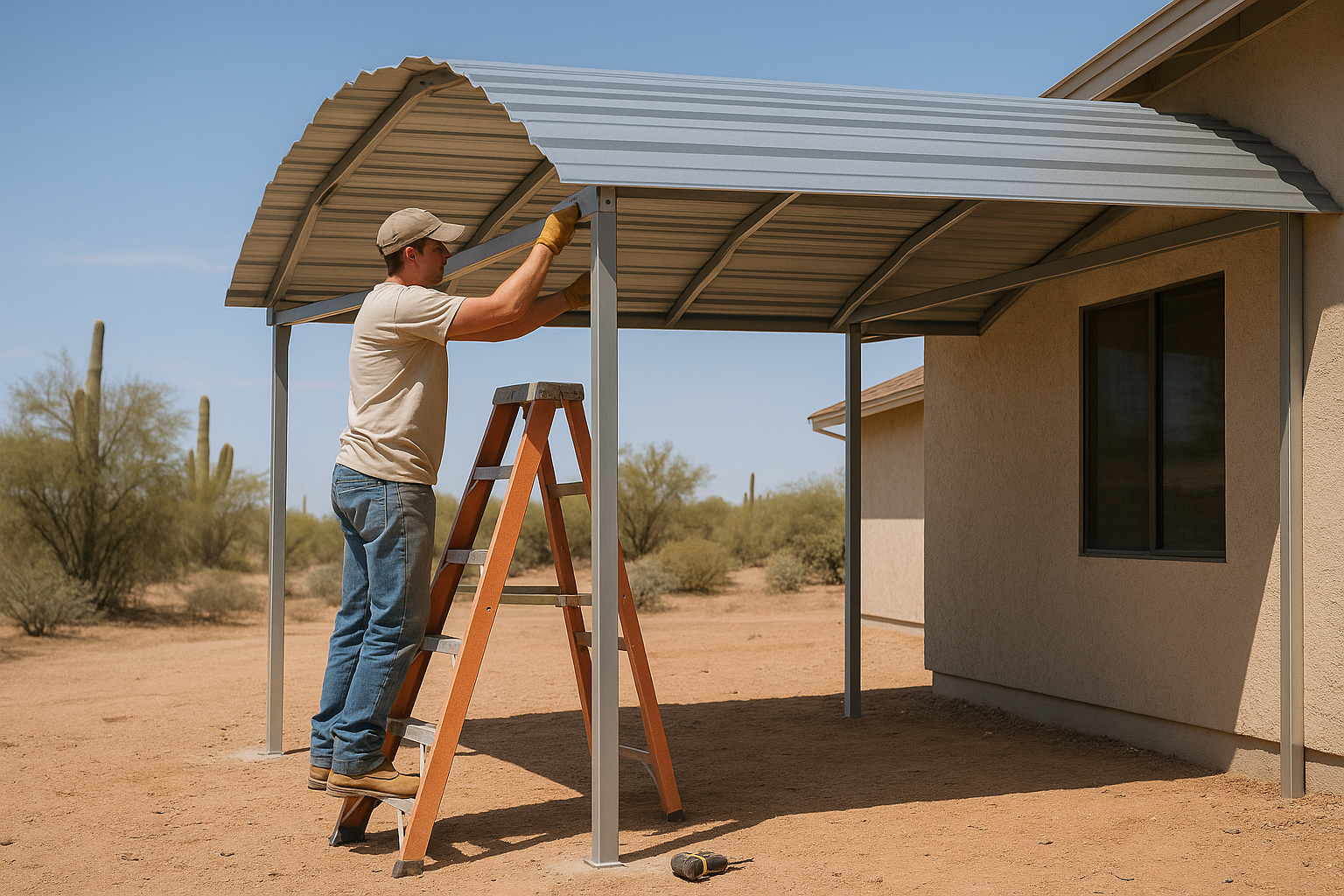
Shade matters here. In Maricopa County, the sun cooks dashboards, monsoon gusts push grit into everything, and a simple metal carport cover can save your paint, your interior, and—honestly—your mood. If you’re thinking about installing one yourself, you can do it. With a good plan, the right hardware, and a few local know‑how tips, your carport will stand straight, shed water, and shrug off wind like a saguaro in a breeze. Let me explain, step by step, how to get it right the first time.
Before you touch a wrench: plan and prep
Start with the basics. Check your HOA rules, lot setbacks, and any easements. Maricopa County’s guidelines can vary by city—Phoenix, Mesa, Gilbert, and the rest all have quirks—so a quick call to your municipality saves headaches. Call 811 before you dig. It’s free and it matters.
Choose a spot with easy vehicle access and enough headroom. Aim for at least 7 feet 6 inches of clearance at the low side and 8 feet or more at the high side. Plan a slope so rain runs off: 1:12 is the bare minimum; 2:12 is better during monsoon bursts. Think wind, too. If your panels face the prevailing summer winds, lap your seams away from the wind so they don’t lift.
One more quiet detail: water. Keep runoff away from the house and your neighbor’s yard. A small gutter and a splash block go a long way.
Tools, hardware, and Materials you’ll actually use
You don’t need a truckload of gear, but the right kit makes it smoother.
- Tools: tape measure, chalk line, string line, 2–4 foot level (a laser level is even better), impact driver, torque wrench, metal-cutting blade (Diablo or IRWIN), step ladder, and a hammer drill for concrete.
- Safety: gloves, eye and ear protection, dust mask (cutting metal in a Phoenix breeze sends filings everywhere).
- Hardware: Simpson Strong‑Tie post bases, wedge anchors (for slabs), Tapcon screws, self‑drilling roofing screws with EPDM washers, butyl tape, foam closure strips, and 100% silicone or polyurethane sealant.
- Materials: galvanized steel or aluminum posts and beams, purlins, and 26–29 gauge roof panels. Quikrete Fast‑Setting Mix if you’re pouring footings.
Small note on metals: don’t mix aluminum and bare steel without a barrier; dissimilar metals can cause corrosion. A thin gasket or paint helps.
Measure once, snap twice: layout and square
Clear the area. Pull a string line where your front beam will go. Square the layout using the 3‑4‑5 triangle trick (measure 3 feet on one side, 4 on the other, and adjust until the diagonal is 5). If you’re thinking, “I’ll eyeball it,” don’t. A square frame keeps panels from fighting you later.
Mark post centers with spray paint. Double‑check the roof slope direction. You want water moving away from doors, walkways, and stucco walls. Stucco hates splashback.
Foundation matters: anchors and footings
You can set posts on an existing concrete slab or pour footings. Both work. The choice depends on your site and local wind exposure.
On a slab: Use Simpson Strong‑Tie post bases and 3/8‑inch wedge anchors. Drill clean holes with a hammer drill, vacuum the dust, and torque per the anchor spec. If the slab is thin or cracked, don’t risk it—switch to piers.
On footings: For most carports here, 12–18 inch diameter and 24–36 inch deep piers hold well. Frost depth isn’t a big issue in the Valley, but wind uplift is. Set galvanized post brackets in wet concrete or use set‑after anchors once it cures. Keep brackets in a straight line with a string and check their height so your slope comes out right.
You don’t need a full slab. Well, you might want one if you hate mud and dust. A compacted gravel pad under the parking area cuts mess and helps drainage.
Posts up, stress down: set and brace
Stand your posts in the brackets and snug the hardware. Use a level on every side and brace each post with temporary 2x4s. Check height against your planned slope. Trim tops if needed. This step feels slow, but plumb posts pay you back when the beams slide on without a fight.
Powder‑coated steel looks sharp and lasts. If you nick it, dab on touch‑up paint right away to protect from rust. It’s Arizona, but moisture still finds a way—especially during monsoon season.
Beams and rafters: find that sweet slope
Attach perimeter beams to the posts with structural bolts. For an attached carport, anchor a ledger to the house framing—not just stucco—with lag screws or sleeve anchors, then flash it. Keep the ledger level and let the front beam drop to create your slope.
Set rafters or purlins across the beams. Spacing usually lands between 16 and 24 inches on center, depending on panel span ratings. Don’t overthink it, but do check the manufacturer’s chart. Leave a small gap at ends for thermal movement; metal grows in the summer heat and shrinks on cool nights.
Roof panels like a pro: fasteners, seams, and sealing
Panels go up fast if you stage them. Start at the end opposite your prevailing winds. Lap the next panel over the rib so wind can’t drive water uphill. Run a strip of butyl tape under laps for extra insurance.
Use self‑drilling screws with EPDM washers on the flats or in the high rib, per the panel design. Keep screw lines straight by snapping a chalk line. Tight, but not crushed—that washer should compress without squishing out. At the top and bottom edges, install foam closure strips and a bead of sealant.
If your carport meets a wall, add headwall flashing under the house’s weather barrier if possible, or over the stucco with a sealed termination bar. Along the drip edge, trim panels clean and add a gutter to steer water where you want it.
Finishing touches that pay off
Seam seal the panel ends and any penetrations. Cap exposed cut edges with touch‑up paint. Consider side shade slats on the western edge; afternoon sun in Glendale hits like a heat lamp. You can even run low‑profile LED strips for soft light at night. Hide conduit in posts for a clean look.
If your HOA leans traditional, choose a neutral color that matches your trim. A tidy carport looks less like a “cover” and more like part of the home.
Safety and the desert reality
Work early. By noon, Mesa roofs feel like griddles. Drink water, wear gloves, and keep kids and pets away from the work zone. Never cut metal without eye protection. If a storm rolls in, pack it up; metal and lightning don’t get along.
One more odd but true tip: adhesives can skin over fast in hot, dry air. Lay shorter beads and set parts right away so the sealant bonds well.
Common mistakes we see in Maricopa County
- Not enough slope. Water lingers, and dust cakes on panels.
- Anchoring to pavers or decomposed granite. It won’t hold.
- Mixing aluminum and bare steel without isolation. Corrosion starts sneaky, then spreads.
- Skipping closure strips. Wind‑driven rain and dust sneak in at the ribs.
- Ignoring setbacks or HOA approvals. The retrofix costs more than the permit.
DIY or call in pros? A quick gut check
If you’re handy with a level and drill, a straightforward freestanding carport is well within reach. Larger spans, tricky slopes, or tying into stucco walls can be another story. When wind loads climb—think open lots in Buckeye—or when you want integrated lighting, permits, and a warranty, bring in a crew.
You know what? Your time has value. A two‑day project can turn into a two‑weekend project fast. There’s no shame in handing the heavy lifting to a team that does this every week under the same stubborn sun.
Need a sturdy carport without the hassle? Let’s talk
Arizona Pergola Company builds metal carport covers that look great and stand up to our desert weather. We handle design, permits, and installation—clean, fast, and friendly. Call us at 480-568-5870 or Request a Free Quote. We’ll measure your space, suggest smart options, and give you a clear price. Your car deserves shade. So do you.