
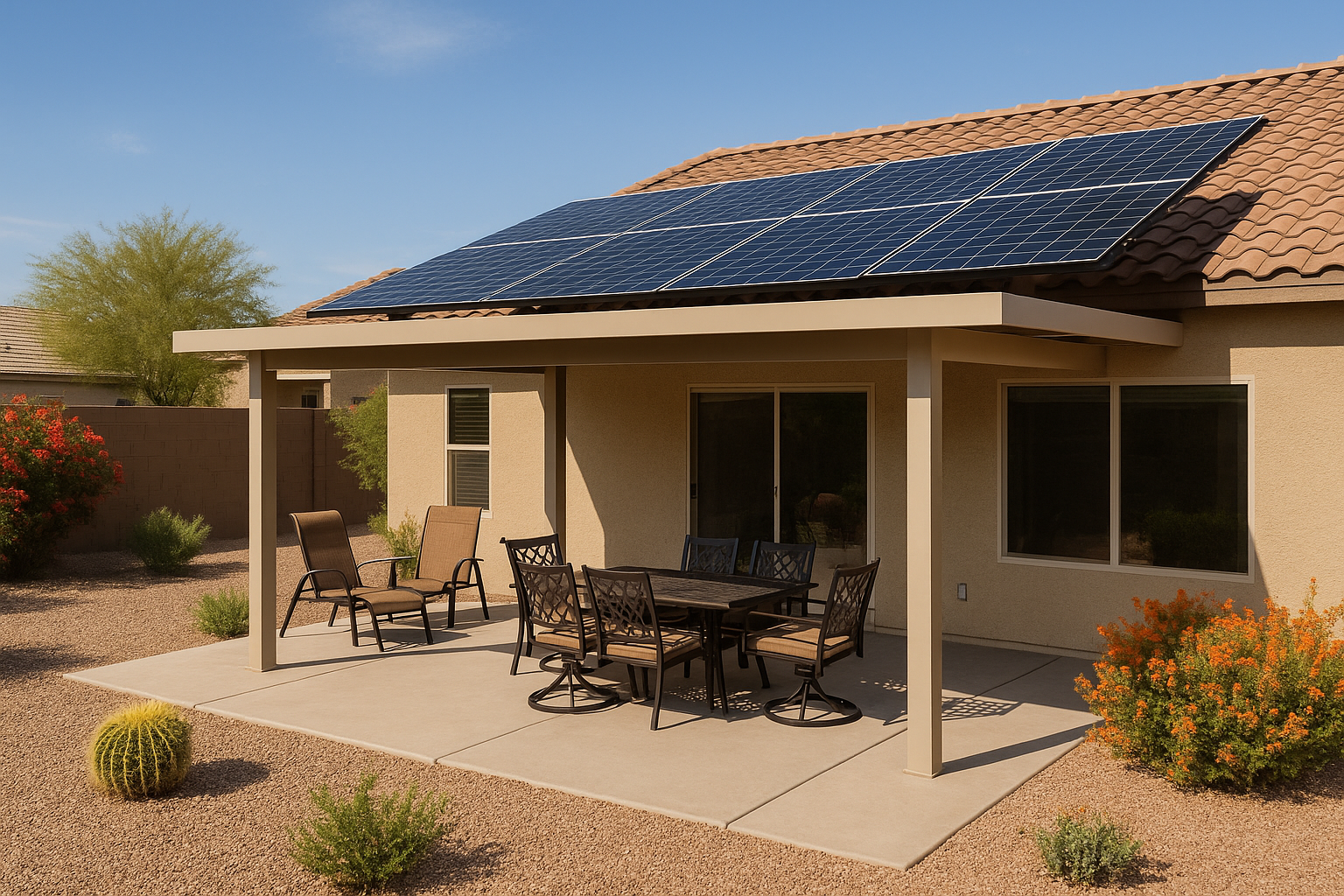
Triple-digit heat is basically a season here in Maricopa County. The sun is generous, but it can be tough. So here’s a simple, smart idea: build shade you actually enjoy, and let that shade make electricity. A solar panel patio cover does both. It cools your hangout spot and helps lower your power bill—without asking you to babysit it. You know what? That’s the kind of upgrade that feels good every single afternoon.
So, what exactly is a solar panel patio cover?
Think of a sturdy pergola or solid-roof patio cover—now picture the “roof” being high-efficiency solar panels. The panels pull double duty: they block harsh sun for comfort, and they turn sunlight into clean energy. Underneath, you get open-air vibes with reliable shade. Above, you get a power plant that hums along quietly.
These structures can be waterproof or open-air. They can match a modern stucco home in Chandler or blend with Spanish-tile charm in Glendale. We build them to code, tie them into your home’s electrical system, and set the panel tilt for strong year-round production. It’s shade with a paycheck.
Why it saves real energy in the Valley heat
Shade is a cool-down button for your whole home. When your patio and west-facing walls sit under a solar cover, less heat soaks into the building. Your AC breathes easier. That’s comfort you can feel and kWh you don’t buy.
Now the fun part: the cover also makes power. Phoenix sunshine is no slouch. As a thumb rule, a 1 kW solar array around here can produce about 1,600–1,800 kWh per year. So a 3 kW patio cover often lands near 4,800–5,400 kWh annually, depending on tilt, orientation, and shade from trees or neighboring homes. That helps offset high summer rates from APS or SRP—especially helpful on those late afternoons when the grid is working hard and your patio is finally comfortable.
And here’s the kicker: better shade outdoors often means you spend more time there and less time cranking the AC indoors. It’s a subtle shift, but it adds up—coffee on the patio in July suddenly sounds… doable.
Design choices that actually matter (and look good)
Structure and style
We build with powder-coated aluminum or steel for durability and clean lines. Prefer a solid, rain-tight cover? We can integrate panels over insulated roof sections with hidden fasteners and gutters. Want a breezier look? A sleek frame with panels as the roof keeps shade high and airy. Colors can match your trim or add a crisp contrast. HOA-friendly? Absolutely—we handle submittals with clean renderings and specs.
Comfort details
Integrated gutters move monsoon bursts where you want them. Ceiling fans and dimmable lights make late-night grilling easy. We can tuck wiring cleanly, add outlets, and plan TV or speaker spots so the whole space works as one.
Engineered for our wind and sun
Monsoon gusts and dust are part of life here. We design for local wind ratings, set proper footings, and use corrosion-resistant hardware. Panels are framed tight, and wire runs are protected from UV. It’s built to chill through summer and shrug off those surprise storms.
The tech inside (without the tech headache)
The brains are simple. Panels mount overhead. Each panel can pair with a microinverter (like Enphase) so power converts to usable AC right at the source. Or we use an optimizer and central inverter setup (like SolarEdge) for smart control. Either way, you get an app that shows your energy in real time. It’s oddly satisfying watching your shade print watts at noon.
We include required safety gear—rapid shutdown per NEC 690.12, proper grounding, and code-compliant disconnects. Curious about batteries? They’re optional. Many homeowners start with the patio cover and add storage later if they want backup power or better evening use.
Built for Arizona: heat, dust, rain—bring it
High heat can nudge panel efficiency down a bit, but the Valley’s solar gain more than makes up for it. Quality panels use tempered glass and tough backsheets that handle UV for decades. Hail here is usually small; panels are tested to take a beating far worse than we see most years.
Maintenance is low. A light rinse every so often helps kick off dust and pollen—especially after a haboob. If you’re particular, deionized water or a soft brush works great. No harsh cleaners. No pressure washers. Treat it like a car with a really nice paint job.
Incentives and local rules (the quick version)
Solar can pencil out fast with current incentives:
- Federal tax credit: 30% of the system cost (available under the Inflation Reduction Act timeline).
- Arizona solar tax credit: up to $1,000 for residential solar energy devices.
- Arizona sales tax exemption: solar equipment is generally exempt from state sales tax.
- Property tax: Arizona excludes the added value of solar from property tax calculations.
Utilities use export credits, not classic one-for-one net metering. APS and SRP have specific plans and interconnection steps. We set the right rate plan with you and handle the paperwork, so you’re not stuck guessing about kWh exports or on-peak windows. Typical permits go through your city—Phoenix, Mesa, Tempe, Peoria, or Scottsdale—and HOAs get neat packets with drawings, finishes, and color chips. We keep it smooth and above board.
As always, talk to your tax pro about your situation. We’ll provide the documentation you need.
How it plays out in real backyards
West-facing yard in Gilbert
Evenings were brutal. We set a 12′ x 20′ solar cover with a gentle tilt to the south, integrated gutters, and two fans. The family gained usable shade from 3 pm on, and their 3.2 kW array now cranks out around 5,000 kWh a year. Grill nights came back. So did their power bill—back down, that is.
Compact patio in Phoenix
Tight space, big sun. A 10′ x 14′ frame with high-efficiency panels still clears bar seating and a small dining set. They track production on the Enphase app, smile at noon peaks, and say lunchtime no longer feels like a dare.
Common questions, quick answers
- Is it waterproof? It can be—choose a solid roof design with integrated panels and gutters.
- How much power can it make? Often 2–6 kW, depending on size and panel selection.
- Will my HOA approve it? We work with HOAs all the time and prep clean submittals.
- Do I need a battery? Not required. Batteries are a nice add-on for backup or evening use.
- What about noise? Solar is silent. Fans, lights, and outlets can be whisper-quiet too.
- How long does it take? Design, permits, and utility approvals usually take a few weeks. Build time is typically a few days once everything is greenlit.
Why Arizona Pergola Company?
We’re local. We live under the same sun you do. We also work with licensed solar partners and engineers, so your shade isn’t just pretty—it’s permitted, inspected, and rock solid. You get thoughtful design, permit handling, HOA help, and clean installs that feel custom without drama.
We’ll sit with you, sketch ideas, and run a quick production estimate so the numbers feel real. If you want to see finish samples in natural light, we bring them to your patio. Honestly, we love the sun—and we love beating it at its own game even more.
Ready to make your shade pay for itself?
Let’s turn your patio into the coolest spot on the block—and a quiet little power plant. Call Arizona Pergola Company at 480-568-5870 or Request a Free Quote. We’ll handle the details while you plan the first cookout under your new shade.