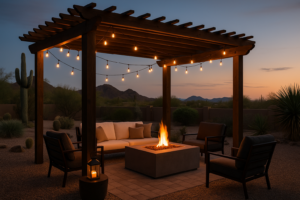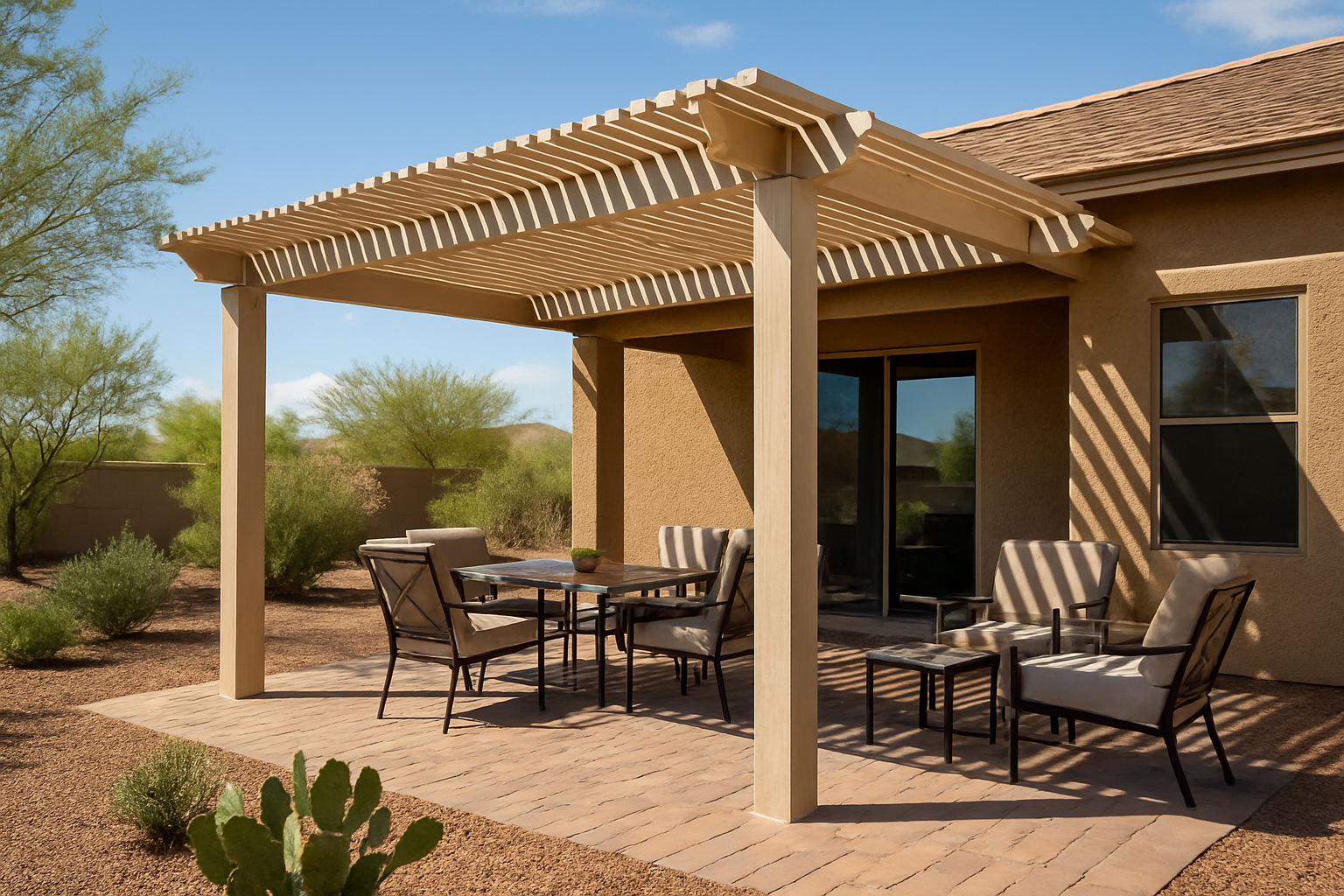
The Arizona sun doesn’t mess around. If you’ve lived through a June heat wave or a late-summer monsoon in Maricopa County, you know shade isn’t a luxury—it’s survival for your patio. A good cover cools the space, protects furniture, and honestly, makes backyard life a lot more fun. But choosing the right material? That’s where it gets tricky. Let’s walk through what works well here, what doesn’t, and a few smart tradeoffs so you can feel confident about your next project.
What matters most under Arizona skies
Here’s the thing: patio covers in Phoenix, Chandler, Mesa, and the West Valley fight on four fronts—UV, heat, wind, and dust. Add HOA rules and maintenance time, and the “right” material starts to look different for each home.
Think about:
- Heat and UV: Will it block sun and lower surface temps without turning the patio into a dark cave?
- Wind and storms: Monsoon gusts and haboobs test every fastener and span.
- Maintenance: Are you up for sanding and staining, or do you want a quick hose-down job?
- Style and HOA: Earth tones are common; bright whites pop but can glare in summer light.
- Budget and lifespan: Cheaper now vs. cheaper over 10–15 years isn’t the same choice.
With that in mind, let’s talk Materials—how they behave in our desert and where they shine.
Wood: warm, classic, and a bit high-maintenance
Wood looks timeless. It brings texture and that “ahh, this feels like a real backyard” vibe. Cedar and redwood handle moisture and insects well. Douglas fir is strong and budget-friendly, often used with quality stains or paints.
The catch? UV and heat are relentless here. Wood needs regular care: cleaning, resealing, and checking for cracks. Termites are real in the Valley, too. We use treated posts and proper footings to keep them at bay, but vigilance still matters.
Pros: rich curb appeal, easy to customize, strong. Cons: more upkeep, can fade or check, and finish matters more than you’d think. If you love the look and don’t mind a yearly Saturday with a brush, wood rewards you.
Aluminum and “Alumawood”-style covers: the desert workhorse
Aluminum is the go-to for low maintenance and long life. It doesn’t rot, won’t rust in our dry climate, and shrugs off sun. Powder-coated finishes (AAMA 2604/2605 level) keep color stable and resist chalking. “Alumawood” is a textured aluminum that looks like painted wood—clean lines with far less upkeep.
Two build types matter: roll-formed pieces for light lattice and trims, and extruded beams for strength where spans get wider. If you’ve got a large patio or a pool deck that needs shade from morning to late afternoon, aluminum handles it without drama.
Insulated roof panels vs. lattice slats
For full shade, insulated aluminum roof panels with an EPS foam core are a crowd favorite. They cut heat, dampen rain noise, and can include an integrated gutter. Lattice covers—open slats—throw pretty shadows and keep things breezier. You know what? Sometimes a hybrid is perfect: solid over the seating area, lattice by the grill for smoke to escape.
Potential downside: aluminum can feel “cool” rather than cozy if you crave a rustic look. Color choice helps; textured browns and deep bronzes read warmer. Also, cheap finishes chalk faster in our sun—this is where brand and coating spec really matter.
Steel: when you need muscle (and modern lines)
Steel excels when spans get big or you want a slim, modern profile. It stands firm in gusty monsoon winds. With the right finish—galvanized base and quality powder coat—maintenance stays reasonable.
It does absorb heat, so shade beneath can feel warmer without insulation above. We often pair steel frames with insulated panels or louvers to balance strength and comfort. If your design skews modern and you want that crisp, architectural look, steel delivers.
Vinyl/PVC: low effort, but mind the heat
Vinyl is popular for ease. Rinse it and you’re done. It won’t rust, and bright whites look fresh against desert landscaping. The tradeoff in Phoenix heat is thermal movement and potential sag on long spans if the framing isn’t right. Cheaper vinyl can yellow or chalk faster under our UV.
We use vinyl more for decorative pergolas and lighter lattice, not wide, heavy roof sections. It’s great for a clean, coastal look—even in the desert—if you keep those spans modest and the build solid.
Composite and fiberglass: strong, stable, and paint-friendly
Structural fiberglass beams (brands like Arbors Direct) bring serious strength with very little expansion in heat. They hold paint beautifully and don’t attract termites. Some “composite” pergolas, like Trex Pergola, blend aluminum cores with cellular PVC wraps for a polished finish that stays true.
Expect a higher upfront cost. But if you want elegant, long spans with wood-like looks and far less maintenance, this category hits a sweet spot.
Polycarbonate or acrylic panels: let the light in, cut the UV
Want light without full sun? Polycarbonate sheets—think brands like Palram Suntuf or Lexan—block UV while brightening the patio. They’re great over side yards or garden spaces where you still want to grow herbs or keep that citrus happy.
They can carry more roof noise in a hard rain, and clear panels may trap heat. We often choose tinted or reflective options to soften glare. Good fasteners and expansion joints are a must; these panels move as temps jump from 55° mornings to 105° afternoons.
Fabric shade sails and retractable awnings: flexible and seasonal
Shade sails look fantastic over pools and play zones. High-density polyethylene (HDPE) fabrics like Monotec or commercial-grade options breathe well, reduce heat, and filter UV. Sunbrella and similar acrylic fabrics hold color and resist mildew.
Anchoring is everything. Posts must be deep, angles tight, and edges tensioned. In heavy monsoon patterns, sails may need to come down. Retractable awnings add convenience but should include wind sensors and sturdy arms. They’re amazing from March through June—and easy to tuck away when storms roll in.
Louvered pergolas: shade that shifts with the day
Adjustable louvers, manual or motorized, let you chase comfort. Brands like StruXure and Equinox rotate to block high sun, open for breeze, and close to create a rain-tight cover with hidden gutters. Add-ons like rain sensors, dimmable LED strips, and heaters turn patios into true four-season rooms (as much as the desert allows).
They cost more and need power. But the control is unmatched. If you host often, work from the patio, or just love tech that actually adds comfort, louvers are hard to beat.
If you care most about X, consider Y
- Lowest maintenance for full shade: insulated aluminum roof panels.
- Warm, natural style: cedar or redwood—plan for regular sealing.
- Big spans and modern lines: steel frame with insulated panels or louvers.
- Light-filled cover for plants: tinted polycarbonate with UV block.
- Flexible, seasonal shade: HDPE shade sails with proper tensioning.
- All-day comfort control: motorized louvered pergola with rain management.
One small contradiction we hear—“I want super cool shade, but I don’t want a solid roof.” That’s fair. The compromise is layered design: solid over the seating area, lattice by the grill, and a stretch of sail near the pool. Shade where you need it, light where you want it.
Permits, wind, and HOA notes (the local stuff)
Most cities in Maricopa County require permits for attached covers and larger freestanding builds. Setbacks, easements, and wind exposure (often B or C) shape beam sizes and post spacing. We engineer for gusts that show up every July, not just calm spring evenings.
HOAs typically ask for earth tones, clean sightlines, and neat drainage. We provide color samples and drawings that pass review without drama. Arizona Pergola Company handles plans, engineering, and submittals—so you can keep planning your first backyard pizza night under real shade.
Care tips for desert longevity
A little love goes a long way here:
- Rinse covers every few months to clear dust and pollen. Monsoon muck adds up.
- Check fasteners after storm season. A quick snug keeps squeaks and rattles away.
- For wood, reseal on schedule. Look for dull spots or water not beading—time to refresh.
- Keep gutters and scuppers clean so heavy downpours don’t overwhelm the system.
- Wipe bird droppings or sap quickly—our sun bakes stains fast.
Bonus tip: a light, matte finish often hides dust better than glossy. Your weekends will thank you.
Ready to shade your patio the smart way?
If you’re in Maricopa County and want a cover that handles heat, wind, and weekend hangouts—let’s talk. Arizona Pergola Company Designs and installs wood, aluminum, steel, louvered systems, and more, all tuned for our desert climate. Call us at 480-568-5870 or Request a Free Quote. We’ll bring samples, sketch options on site, and help you pick the material that feels right—cooler days and softer evenings included.